The women painting the hoarding were wearing headscarves. Practical, maybe, keeping off the sun. But so too were the volunteers working in the
Transitional “cardboard” Cathedral. And
women in business suits out for their morning coffee. And women pushing prams and out with their
friends. Scarves that would usually
simply ‘accessorise’ an outfit were now draped over heads, regardless of the
wearers’ ethnicity. One week on from a
mass shooting that horrified the world, Christchurch was coming together again,
as it had done in the aftermath of the seemingly never-ending spate of earthquakes
in 2010 and 2011, the prime minister’s words, “We are one. They are us,” very much alive.
Floral tributes outside the Botanical Gardens
This wasn’t some kind of ghoulish rubber-necking on my part,
though I was painfully conscious of the potential accusation. Since planning my visa-driven long weekend
away from Australia staying with a friend living in nearby Lyttleton, I’d
always intended to spend that day in Christchurch, a city I hadn’t visited
since 1993. Hearing the developing news
throughout the afternoon and evening the previous Friday, I was shocked, in
common with so many people around the world.
“But it’s New Zealand! What have
they ever done to anyone?” This felt
closer to home than any attack since London Bridge in June 2017 (though even
that had had a tired old sameness to it – yet
another atrocity in my poor old home town).
Christchurch street art
This isn’t the place to go into the whys and wherefores, nor
even the horrors of the day itself, all of which have been well documented in
more appropriate forums. For me, there
was no question of changing my plans, and, hearing of the commemorative
lunchtime prayer gathering in Hagley Park, I felt grateful, privileged to have
the chance to go and show my own support for the dead, the injured, and those
trying to piece their lives back together.
Christchurch street art
It was an extraordinarily dignified event. In the furthest corner of South Hagley Park,
an area had been set aside for Muslim men and women to pray as they would have
done in a mosque, nearby Masjid Al Noor, the scene of the beginning of the
shooting spree and the majority of fatalities, still being closed for forensic
examination. Further back, non-Muslims
were invited to be seated and share in the prayers, an honour in itself. Joining a sombre line of people walking
through the Botanical Gardens and across Riccarton Avenue to the Park, I
watched people amassing from all directions, quietly drawn to this show of
strength and support for their townsfolk.
Christchurch street art
The muezzin shyly sang the haunting call to prayer into a
microphone at the front of the gathering.
An impeccably-kept two-minute silence was brought to an end by the voice
of Jacinda Ardern. Shunning either of
the podia, clearly conscious that this was not a day for her to take the limelight,
and wearing a headscarf, she recited an Islamic proverb and spoke briefly from
amongst the gathered Muslim women. Prayers
then resumed. Imam Gamal Fouda, who only
a week earlier had stared the terrorist in the face himself, looked out over the
20,000 or so gathered before him, and, bravely conquering his own emotions,
spoke for all: “…we have shown that New
Zealand is unbreakable. And that the world can see in us an example of love and
unity. We are broken-hearted but we are
not broken”. Tentative applause rippled out
at “unbreakable” and “not broken”; we
weren’t sure if this was the right thing to do, but knew no other way to show
our support. When the Imam explained, “We
are taught by our prophet, Mohamed, that you can never truly show gratitude to
the almighty God without thanking your fellow man”, the applause grew and grew,
peaking in response to his praise of the police force and front-line services –
“You put our lives before your own every day”.
The service ended with simple words of love in the Maori language, and
we slowly got to our feet to disperse in the same sombre manner with which we
had gathered.
Avon River
At lunchtime on the Monday, I stopped at the now-reopened
mosque. The floral tributes outside the
Botanical Gardens had been stunning, messages from around the world, from a
wide range of communities and peoples.
At the Masjid Al Noor, the tributes were fewer in number but even more
poignant, with photographs and messages to particular loved ones – brothers,
sisters, uncles, parents, friends, team-mates, teachers – pinned up on the
railings and scattered through the flowers and candles. Men and women passed me on the way into the
mosque, heads high and faces passive.
Such poise and strength was humbling.
Christchurch Cathedral
Christchurch has been here before, its ravaged suffering
beamed around the world, but, in 2010 and 2011, it was the forces of nature
that had held the city in their grasp and treated its people, buildings and
surroundings with almighty disdain. A
miraculous escape in terms of the human cost in September 2010 – the 7.1 ’quake
struck at 4.35 am – was horrifyingly reversed by the 6.2 ’quake that hit the
city one Tuesday lunchtime the following February. Phenomenally candid and at times brutal documentaries
have emerged, thanks to those who realised, in the middle of the dust and
chaos, that here was something that had to be captured for posterity. “When A
City Falls” tracks each of the major earthquakes of the 2010-11 period
(something like five in number, though interspersed with countless other
tremors), and some of the rebuilding efforts.
“The Day That Changed My Life”
focuses simply on the horrors of 22 February 2011 when, amongst the many other
tragedies, the Canterbury Television building collapsed, killing over a hundred
people, including foreign students and staff at the English language school
that occupied one of the floors. One
young journalist, still dusty from crawling out of the rubble herself, and a
cameraman took to the streets to document events as they happened.
The Cathedral of the Blessed Sacrament
Add to this the superbly compiled exhibition at Quake City,
near the still evidently hard-hit centre of town, and you might get a smidgeon
of an inkling of what the city and its inhabitants have gone through. Out in one of the “red” zones – areas deemed
too unsafe for rebuilding thanks to liquefaction, that ghastly purée-ing
of soil and sand – and the feeling is eerie.
A few people hold out, like the family resisting an airport expansion in
the wonderful Australian movie “The Castle”, their houses surrounded by acres
of otherwise cleared land. Lanes wind
randomly through grassland and wetlands, a park – signposted and marked out by its
trees and hedges – looks incongruous, and electrical boxes punctuate the
pavements. Elsewhere in the city,
rebuilding is underway with a vengeance.
Some wonderful architecture is taking shape, and, in between, people
make do and make do creatively thanks to the amazing work of the Gap Filler
enterprise, creating, in their words, “installations, events and processes to
make places more memorable, fun, participatory, surprising, equitable and
sociable”.
The Transitional (cardboard) Cathedral
This is a city that should feel like a ghost-town. It should feel sorry for itself, violated by
the forces of nature and evil. It should
feel like one of the world’s helpless charity cases. But it doesn’t. Despite the events of ten days’ earlier, I
left for the airport feeling oddly buoyed by the resilience of a people pulling
together. Of course it’s not perfect –
despite some New Zealanders’ head-in-the-sand beliefs to the contrary, Islamophobia
is not a purely foreign phenomenon – but, in the words of Imam Gamal Fouda,
“Our assembly here, with all the shades of our diversity, is a testament of our
joint humanity”. Christchurch has
lessons for us all.
This trip was jinxed, or so I thought, still recovering from
a duo of lurgies as I lay in an MRI on a Saturday evening five days before my
flight. Not to mention the saga of
getting a Ghanaian visa, the moral of which is – to save you the gory details,
not least of which was the size of my ’phone bill to the High Commission – if in
doubt, pay more to get it done fast. You
can’t lose, and it beats having the travel agent on standby and almost missing
a friend’s Kenyan wedding. This is not a
time to be Scottish.
a colourful football pitch
So it was with a major degree of self-pinching that I found
myself boarding the right flight on the right day, and then, still glowing from
the buzz of a spectacular bush wedding, getting myself across the continent a
few days’ later to the source of my visa-stress. But if I were in danger of holding its intransigent
bureaucracy against Ghana, I was soon won over by the chatty friendliness of my
pink-shirt-uniformed taxi driver at the airport as he pointed me towards an
ATM, escorted me along the road to his car (taxis pay a premium to park outside
the sparkling new international terminal, so most simply park at the old
terminal down the road, now dedicated to domestic flights, and take their
customers on the free shuttle bus that runs between the two), and chatted
English premier league football on the way to my hostel. (Not for the first time, I sent silent thanks
to a football-mad ex, courtesy of whom I have managed to absorb enough to blag
my way through a good 10-15 minutes of soccer-talk, an invaluable skill in 95%
of the countries I’ve visited, not to mention more than the occasional business
meeting in my old life.)
voodoo house (this is as close as I was allowed)
“I’m HERE!!!” I wrote incredulously in my diary that night.
Maybe it’s not surprising that, the more you travel, the
more echoes new places have of the previously-visited. I remember the bustle of comparisons in my
mind when I first reached Leh in Ladakh – the Wakhan, San Pedro de Atacama,
Bhutan – and I found similar memories crowding in, unbidden, on my first day in
Accra – Yangon, Sittwe, Mawlwamyline, Bangalore. But then, as I had found with Leh, Accra’s own
personality began to come through.
Christ the King school with James Town lighthouse
Mine was not an introduction for the faint-hearted. Determined, as ever, to kick off my
exploration of a new city with a Sight-With-A-View, I negotiated a taxi-ride across
the city to the James Town Lighthouse (the negotiation being somewhat to the
surprise of the cab driver, who visibly re-categorised me from naïve oburoni to
oh-dammit-she-knows-how-this-works, though I subsequently gave him the balance
as a tip; he’d been a deft driver, a
valuable skill on Accra’s busy and often not-always-well-surfaced roads). Sadly the red-and-white-striped lighthouse
was closed, but, as I stood getting my bearings, I was buttonholed by Daniel, a
teacher at the local orphan school. A young
widower with dreadlocked hair pulled back in a rough ponytail, telling me tales
of the slave days and modern-day political corruption, he took me around the
fishing village below the lighthouse, and through the maze of streets of James
Town itself in a way that I could never have managed on my own. It wasn’t so much the risk of getting lost
that would have held me back, as a very British reluctance to intrude on
someone else’s space. Only with a local
could I meander through a school, walk down a narrow alleyway between houses, inch
my way between the crowded fishing pirogues as their crews cleaned up after the
morning’s outing, or pause for any length of time to absorb my surroundings while
he exchanged pleasantries with the locals.
Litter was everywhere, but so was hard work – the physical effort
involved in every aspect of daily life – and, with a little coaxing, smiles.
fishing village below James Fort
For me, the city should have been redolent with history, but
it’s such an appalling and tragic history that I felt embarrassed to talk about
it or look for it. Time and again through
the coming weeks I was – not surprisingly – asked where I came from, and I’d give
my answer a little tentatively. “Our
colonial masters,” came the response on several occasions. The first time I had gulped, “Err, yes”, otherwise
lost for words, but it tended to be said in such a matter-of-fact manner that
my embarrassment slowly lessened, though it never entirely went away. But Accra does not seem to be particularly interested
in its history, if stopping short of bulldozing the trio of European castles
that still line its coast. The
formerly-English James Fort was used as a prison until 2009, and is now
theoretically open to the public, but it was closed when I was there – no
reason given, and no sign that it would reopen any time soon. (That said, I’m not sure that you can see
much more than the old buildings themselves.)
More disappointingly, Ussher Fort – formerly Dutch – which has been
developed into a museum to try and attract tourists otherwise heading to the
better established “slave castles” along the coast, was also closed. Christiansborg Castle, now known as Osu
Castle, has had various incarnations since the Danish left, including as the
seat of government and the president’s official residence at independence in
1957. There’s talk of turning it into a
museum as well, but some government departments are still based there, and
there’s a ban on photography anywhere closer than 250m away.
the fringes of Makola Market
Instead of history, I opted for retail, albeit first on a
spectator basis, and dipped into the chaos of Makola Market. Brilliant colours surrounded me – Ghanaian
fabric, whether already made up into clothes or piled up in bolts, is
fabulously colourful and steeped in tradition.
Proper Kente cloth, for example, with its history in Asante ceremonial
practices, is woven and uses traditional geometric designs, and even the cheap
printed versions are dramatic. But with part
of the Makola Market in a still-being-used car park, meandering around was not
something to be undertaken lightly. Winding
my way carefully between cheek-by-jowl stalls with the added frisson of potentially
being squashed, I could have done with surround-vision. I decided not to chance my luck for long.
Independence Arch
Despite repeated evidence to the contrary, particularly in
the developing world, I persist in the optimistic view that roads running parallel
to the coast must be scenic. But not
here. Further along the
dramatically-named John Evans Atta Mills High Street (a bit of a mouthful, but
that’s what happens if you name a road after the first Ghanaian president to
die in office), my surroundings developed an oddly soviet feel. Independence Arch might have had echoes of
India Gate and the Arc de Triomphe
if it weren’t for the huge black star perched on top. Across the road, I couldn’t imagine that the almost
agoraphobia-inducing Independence Square would often be filled to capacity
without a Chinese or North Korean culture of regular military parades. And here, what passes for beaches, as I was
to find again further along the coast, often does duty as latrines and garbage
dumps, rather than pretty places of recreation.
Oxford Street
I returned to retail later in the day, having found my way
to Oxford Street (yes, really – although the name is pretty much the sum total
of its resemblance to either its London or Sydney namesakes), my specific destination
the Vidya Bookstore. I’m often intrigued
by bookshops abroad, particularly if there’s a chance of finding books in
English by local authors, and this one did not disappoint. I had to restrain myself, conscious that,
whatever I bought here, I’d be carrying for the next seven weeks of my trip.
the laundry-Santa
The next day I returned to Oxford Street with a more
functional shopping list in anticipation of my venturing further afield later
in the week. While my need for a local
SIM card was relatively conventionally fulfilled by an electronics shop, it was
a man sitting behind a tiny stall wedged between a couple of badly parked cars
and a shop-front who replaced the battery in my watch. Not cheap – this isn’t Delhi, where a
stallholder in the depths of Khan Market had provided the now-defunct battery –
but very quick and efficient, and definitely with the personal touch.
a long way from its usual habitat
Later in my trip, when I overnighted back in the city and
needed to shop for a few mundanities, the wonderfully-named Koala Supermarket
produced a bar of Cadbury’s chocolate from its over air-conditioned
interior. Sometimes a girl just needs
chocolate, and I sat on the low wall around the supermarket’s small car park
and devoured it happily, the speed and location of the devouring being more driven
by ambient weather conditions of 33°C (91°F) and 80% humidity than my self-justified
need.
Christiansborg War Cemetery
The next day, I went in search of more recent history in the
Military Cemetery and the Christansborg War Cemetery. At the former, a guard belatedly emerged from
his hut and, stern-faced, summoned me in to ask my purpose. Clearly this wasn’t supposed to be open to
tourists, or, in any event, my interest in history and acknowledging the
sacrifice of others did not tick the right boxes for him, so I smiled my
apologies to his continuingly implacable features, and scuttled out of the
gates. By contrast, at the War Cemetery,
I had the place to myself. As ever in
such places, there were rows of identical marble headstones, the simplicity of
the engraving on each – the regiment’s name and crest, words from the Koran or
a serif-ed cross, the serviceman’s name, number and dates – so much more poignant
than flowery words would have been.
Kwame Nkrumah
Later, I reached Kwame Nkrumah Memorial Park, a permanent
tribute to the first
prime minister and president of Ghana, who led the Gold Coast to independence
in 1957, the first sub-Saharan African country to shake off
European colonialism. Here
too the structure above his tomb is somewhat soviet in impression, but the
small museum behind it was oddly affecting:
an endless collection of photographs of Dr Nkrumah with the great and/or
notorious of his generation – Mao, Zhou, Khrushchev, Nehru, JFK, Queen
Elizabeth II, Lumumba, Nasser and Castro amongst them – and some touchingly
personal items, including his no-frills acreage of a desk, a plain bookcase and
some clothes.
fabulous fabrics
At the gateway to the Park, I had a lovely exchange with a
bracelet-maker, who asked if I was a researcher (must have been the Aussie bush
hat). When I disclosed my profession, he
said “I love lawyers!”, so I teased him, “Nobody loves lawyers!”, but it
transpired that a long-time UK-resident friend of his who, thanks to a stint at
Her Majesty’s pleasure, had found himself on the point of expulsion from the
UK, was saved (at least for the time being) by the actions of one of my
professional colleagues. A rare positive
PR moment for the legal profession.
the National Theatre
In between the Second World War and Ghanaian independence, I
had checked out the National Theatre.
Although more recent and Chinese-constructed, its shape and oddly
anonymous facade strongly reminded me of London’s South Bank version.
fishing village below James Town lighthouse
My final “see the sights” stop was the impressively-named Rising
Phoenix Magic Beach Resort, with its delightful injunction, “NO SMOKING. Let’s
all breath the ocean magic”. Grander in
name than actuality, I found myself supping what I considered to be a well-earned
beer in the company of Chris from Ethiopia, pot-smoking, sign-disregarding,
Rasta woollen hat and all, whom I managed to distract with the Book while I
caught up on my diary.
Over the coming weeks, I was to come back to Accra in
between forays further afield, and, each time I returned, it felt more and more
like ‘home’, an invaluable and friendly stop-and-catch-up-with-myself point. It’s
scruffy and ramshackle and full of traffic, but it’s also full of people and colour
and friendliness. And it’s a base I’ll
definitely use on my next West African peregrinations.
Overnight
camp was usually in a village, either in or around a particular family’s
compound, or at one side of the village school’s grounds. As the guides repeatedly reminded us, this
trek did not just benefit them – in the form of both fees from Papillon Reizen
(the Mali-based Dutch/Malian company that had arranged the trip) and potential
post-trip tips – but also the communities through which we passed. Overnight hosts and rest/lunch sites – also
usually in the corner of a school’s grounds – would have been remunerated, as
were various forms of entertainment laid on for us. With an afternoon to spare in Sindou, we were
taken to the neighbouring village of Kawara, renowned for its pottery, although
“pottery dancing” was an unexpected take on the subject-matter. Five ladies, matching loose white cotton tops
and skirts put on over their day clothes, carefully placed heavy clay pots on a
circle of cloth on their heads, and then danced to the lively beat provided by
a couple of drummers. Not once did any
of them reach up a hand to check the pot’s position. When, laughing and drenched in sweat at the
end of the performance, they suggested I try a pot myself, I was aghast at its
weight, but this is a world where everything is carried aloft; hands are only for overflow items. While I hate to think what it does to their
necks, there’s no denying Burkinabés’
fabulous posture.
Nyoufila campsite
Abu, Sinaly, Alassan and Ibrahim with the trusty steed
The
irrepressible moto-tricycle driver Abu would invariably reach our evening’s
campsite before us, and, punters distracted by tea and coffee and the prospect
of ‘ablutions’, he and the guides would put up our generous-sized lightweight
tents, clipping the fabric to the poles so that the tents could be moved around
as required. I hate to think how hard it
would have been to try and bang a tent peg or two into this hard unforgiving
ground. Usually the flysheets would be
left to one side – anything to reduce the temperature in the tents by a degree
or two – but one evening, cautious of the amount of lightning that had been
flickering in the far distance all evening, we put them on. And only just in time. My recollection is that it then rained pretty
much all night, thunder cracking right above us, though it clearly eased off
towards morning. The guides, driver and
cook were in older, one-layered tents, and had had to rescue themselves – five
Noahs minus an Ark – in the middle of the night, moving their tents underneath
the overhang of the primary house in the homestay compound where we’d been made
so welcome the night before. At
lunchtime the next day – while we lazed on the rocks beside the Karfiguéla river,
enjoying a rare few hours without chickens, goats and kids – they quietly
unpacked everything from the moto-tricycle to dry it in the sun.
a welcome beer in Sindou
To a
limited extent, we also spent money as we went, but largely only on
much-desired soft drinks and “Burkina”, the local beer. To our surprise, a usually cold beer could be
procured most nights. Sometimes a lad on
a moped or bicycle would be dispatched to satisfy the blancs’ desires. On one occasion, we were escorted to the
local “pub”, a couple of tables and chairs set out behind a drinks shop that
we’d patronised earlier, the hostess then returning to doze on a bench to the
side of the hut, and we had to wake her to pay our bill. On another, we were dispatched to the posh
walled compound next door to our campsite, where the fact that our hostess was
out of beer was no hindrance – she dispatched her sister on a moped to buy some
from the “pub” down the road, and poured us small glasses of her own homemade
hooch in the interim.
idyllic lunchspot
There
was no danger of starving on this trek.
Danny cooked as if for the five thousand, though I’m sure that nothing
went to waste. Breakfast featured bread,
jam and honey, a challenge for my more savoury-oriented Dutch co-trekkers, but
occasional vegetable omelettes went some way towards counterbalancing the
sugar-fest. Lunch and dinner would
involve a vast quantity of carbohydrate – pasta, rice or sweet potato (either
boiled or as chips) – and a sauce of some kind, vegetable, tomato, sesame, with
fruit for dessert. Every day Danny and
Abu found fresh produce in a local market, so our diet necessarily reflected
what had been available. Once he cooked
meat, thoughtfully separately from the sauce, and once he cooked fish – but not
the first time he found it in the market because Ibrahim, our overall trip
guide, decided that it had been out too long, and deemed it unsafe for the
delicate stomachs of his clients.
Blisters plus heat plus dodgy insides would not have been fun.
Loumana kids
Giggling at her brother
Remarkably,
we were given access to ‘ablution’ facilities in every village where we
stayed. I hadn’t expected such luxury,
and had stocked up on wet wipes before I left.
But everywhere our buckets were filled with clean water, plastic mugs
provided for water-application, and a reasonably private enclosure put at our
disposal. At one end of the spectrum,
this was patchily walled with plastic sheeting, necessitating a degree of
permanent ducking-down to avoid scaring the locals; at the other end, it was a
proper roofed mud, with a shower curtain hanging across the doorway. The water might have been cold, but the
chance to wash off the day’s dust and sweat was simply wonderful.
The photograph that almost got me into trouble
For
the most part, we had left officialdom behind.
The day-long bus journey from Ouagadougou to Bobo Dioulasso and on to
Banfora had been intermittently punctuated by roadblocks, everyone piling off
to line up and show identity papers to a couple of tall smartly-uniformed but
unsmiling policemen. I ladled on the
charm and beatific smiles, my French polished to sparkling point, but rarely
got more than a grunt in return. Of
course, taking photographs of roadblocks, and the police and army in any form
is forbidden, as in many other countries around the world. But who could really complain about my
photographing the Loumana village sign?
Late in the afternoon of our first day’s trekking I soon found out,
thanks to my subject-matter being somewhat unfortunately located across from
the police station. With Loumana being
the nearest control point for the Malian border, less than ten miles’ away, the
cops here, despite their elderly and dusty rifles, clearly regard themselves as
the frontline against Al-Qaeda in the Islamic Maghreb – although the nearest
suspected AQIM attack in Mali of recent months is further away than its
equivalent in Burkina Faso. It did not
appear to be a particularly onerous role.
The prospect of buttonholing a couple of rarely-sighted ‘blancs’ looked
too good to miss, a valuable interruption to their evident boredom, and we were
beckoned over with an appropriate degree of solemnity. On our side, out came the charm and beatific
smiles again, though I was feeling particularly guilty lest I’d caused a
problem for the two Burkinabés with
us, Sinaly and Ibrahim.
Grey-headed kingfisher
But
all ended well. The head honcho, looking
suitably stern, reminded me firmly of the photographic prohibition, checking my
camera’s recent snaps to ensure that I had not recorded anything I shouldn’t’ve
– though what this landlocked country’s resident made of the pictures of the
ocean off Australia’s Central Coast when he scrolled too far forwards, I really
don’t know – and examined closely our passports and visas, directing a minion
to write down their details. (We were
amused to see that the minion then delegated the work to a sub-minion, who had
not been party to the original set of instructions, so goodness knows what
finally got recorded.) Business
concluded, the head honcho turned back to us to ask whether, as we had just
come from Niasogoni – even closer to the border than Loumana – we had not been
very frightened to be in such proximity to Mali. No, not at all, I assured him. I was initially bemused by the question: he must know that there’s no issue with this
part of Mali, the country to the west of Timbuktu being pretty safe, just as is
Burkina Faso to the west of Ouagadougou.
But, on reflection, perhaps it’s simply that he has been particularly
conscious of the drop in tourism to both countries, so wanted to find out why
we hadn’t been put off like so many others.
I shrugged. “Nous avons aussi beaucoup de problèmes à Londres,” I assured
him, “comme tout
le monde”. Our
hosts nodded sagely. On that
philosophical note, we were dismissed.
The faces shine out at me, as intrigued by us as we are by them. I can hear the drums, the insistent beat, as the women start to move, clay pots balanced precariously on their heads. I feel the heat of the mid-afternoon sun. I can smell the dust, the cooking fires. I laugh at the children, born with the beat in their blood, the youngest barely able to stand but already able to dance.
And then my phone beeps, and I’m at my desk in London, shivering in several layers of winter clothing, as I sort through my photographs. But for a few minutes I was there, back in Kawara, watching the laughing faces of the dancers, uncaring about the weight of the pots on their heads, sweat pouring off their faces, and the kids who’d picked up the insistent beat of the drums from the moment the musicians’ sticks first made contact.
Eyeing up the future…
I wonder what they’re all doing now, they and everyone else I was lucky enough to meet in Burkina Faso’s Senoufou country. It’s a part of the world that even their fellow Burkinabés regard with trepidation. A friend crossing theMalian border nearby was told in all seriousness by customs officials that “only wizards and witches live there”. But the Senoufou people I met didn’t look very magical or frightening to me. The young boy at Nyoufila, who will be bringing in the family goats right about now. The fisherman, who will be laying his nets forthe morning. The matriarch of our Bobadiougou homestay family, who will be overseeing the preparation of the evening meal by her daughters-in-law, the girls stopping occasionally to adjust the babies on their backs, fires burning, the dog looking hopeful, and the hens getting underfoot. The kids, who will be streaming out of school, Arsenal, Barcelona and Real Madrid drawstring bagsflapping on their backs, books and lunch packets balanced on their heads, dusty feet pattering over dusty ground. Almost certainly, sadly, there would have been no ‘blancs’ to distract or entertain them today. Senoufou is off the beaten trackby any standards, and cursed now by lying largely under the “red” travel advisory adopted by western governments taking the easy way out. It’s time-consuming to work out which parts of the country are safe and which aren’t. Let’s just brush the whole place in swathes of red, or, for the lucky bits, orange. Saves us having to pull people out of an area that’s safer than London, Paris or New York.
Sindou Peaks
But the rewards are enormous for those who do get there, protected by specialist (and inexpensive) travel insurance, carrying oft-requested passports (though I’m not sure that every official requesting mine could read Latin script) containing hard-procured visas (with no embassy in London, my passport had had to swim the Channel). Apart from the warm welcome we received everywhere, surprised faces lighting up on hearing our one or two phrases of Doula, the scenery is rich and ancient.
Precarious rocks, Sindou Peaks
But the rewards are enormous for those who do get there, protected by specialist (and inexpensive) travel insurance, carrying oft-requested passports (though I’m not sure that every official requesting mine could read Latin script) containing hard-procured visas (with no embassy in London, my passport had had to swim the Channel). Apart from the warm welcome we received everywhere, surprised faces lighting up on hearing our one or two phrases of Doula, the scenery is rich and ancient.
Moussono Peaks
The Sindou Peaks are the best known formation in the area, romantic, mysterious crags and peaks where an imaginative mind can run riot, finding shapes in the rocks and thinking about what life would have been like for the people living on this plateau, safe from neighbouring warring tribes but facing the daily challenge of bringing water up from the valley.
I preferred the only-recently-discovered-by-tourists Moussono Peaks, perhaps not as numerous but appealing for their anonymity. Little by way of paths, a vegetation wilderness, and even more tranquil, even further from anything approaching a road.
Niansogoni village
The village of Niansogoni had also sought refuge from its neighbours, hiding troglodyte-like up a dramatic escarpment that, for the tourist, provides fabulous views across to Mali only a few kilometres away. Our guide’s own parents had been born up there, the village only coming down off the mountain in the 1980s. With the erstwhile marauding tribes having settled down, better access to water was now more important than safety.
the Dômes de Fabedougou
To the east are the bizarre Dômes de Fabedougou. Geologically very similar, I’m told, to Western Australia’s Bungle Bungles, here you can camp in amongst these horizontal-layered limestone beehive formations, though your sleep may well be interrupted by the eerie shriek of a barn owl. And, bar the occasional goat- or cow-herd, you’re almost guaranteed to have the Dômes to yourself.
Not far away are the Karfiguéla Falls, rushing torrents when we visited thanks to unexpected post-wet season downpours. Possibly cool and refreshing in the hot season, but too fierce right now for this somewhat trepidatious swimmer.
who’s watching whom?
And finally the mirror-smooth waters of Tengréla Lake where the locals live in remarkable harmony with the local hippo population, seemingly on the basis of “we won’t disturb you, if you don’t disturb us”. Familiar grumpy honking as dusk fell sent a happy shiver down my spine.
blancs-watching – Malon kids
It wasn’t an easy journey, averaging 18 km a day for nine days in temperatures of 35-38°C (95-100°F), unseasonably hot even by the standards of this part of the world. Increasingly, the day’s walk became a matterof endurance, a case of “let’s just get there”, rather than pausing for any length of time to imbibe our surroundings. Setting off at 6 am one day got us to our destination by 10.30am or so, with little to do for the rest of the day other than lounge, hotly and dustily, dozing, reading, and intermittently flicking away flies and squashing ants. On that particular occasion, we were camping in a distant corner of a school’s grounds, but it was a Saturday so the kids finished at lunchtime and gradually dissipated, apart from a fluctuating number of hard-core ‘blancs’-watchers who stood a couple of metres away and gazed at the strangers. Too hot and sleepy to interact with them for much of the time, we turned away and left them to their staring. Curious, I asked them at one point why they were there, whether they had anything else to do, prompting shy giggles but no answers that I could understand.
At least someone knows which path to take…
The walking itself was easy, the land largely flat and the tracks well-used if occasionally too narrow for the moto-tricycle that carried our kit and possessions between campsites. Sinaly, our unflappable and ever-smiling guide, knows this area like the back of his hand. Occasionally I’d stop: just what had made him take this particular dusty track in the scrub at the fork back there, rather than the other? Road-signs there were not. If our small group had spread out too far, he’d mark the turning with a broken branch, and, although I was sceptical that such markers could withstand a passing moped or herd of cattle, we didn’t lose anyone.
rice paddies
For the most part we were walking through or between fields where an amazing range of foodstuffs were growing. To my chagrin, I couldn’t identify anything other than rice. I didn’t know what a groundnut plant looked like, nor sesame grasses, sorghum, tamarind or cashew; I hadn’t heard of red hibiscus (a popular tea in the area that is also exported to nearby wetter countries that can’t grow it, such as Côte d’Ivoire). Nor did I know what a cotton flower looked like, nor teak or kapok. Mango trees we quickly grew to recognise and love for their generous and welcome shade.
Starting early
Around the two ‘barrages’ – huge artificial lakes constructed in the 1980s at the instigation of the ‘father’ of Burkina Faso, the remarkably modern-of-outlook if controversial Thomas Sankara – and below the Karfiguéla Falls, we walked alongside seemingly endless Roman-road-straight irrigation canals. Women worked in the fields, and washed clothes in the waterways; kids herded cattle, sheep, goats. At harvest season, everyone turned out to help, men moving between mounds of cut rice plants to assess their quality and value.
Taking out the sheep
The day starts early here, life being dictated by the sun. Dawn would not yet have broken but the kids would be pulling up leaking buckets of water from the well, herding the sheep up the track, and helping to feed their youngest siblings, before scampering off to school, while women tended the fires and began their day’s chores. Villages would be empty of people by mid-morning, but by the late afternoon cooking fires would be lit, young kids bringing back the livestock, and the smallest being reluctantly subjected to a wash.
At Bobadiougou, where our Turka hosts had suggested that we set up our tents in the middle of their compound, generously making us feel part of the family, the matriarch came to join us after dinner and regale us with a couple of her people’s legends, Ibrahim translating, sentence by sentence. To my chagrin, little of the tales themselveshas stuck in my mind: I was just bewitched by the experience. Here we were, a Brit and three Dutch, sitting at the feet of this village elder, listening – along with three generations of her own family and other villagers – to tales that had come down the years, decades, centuries, tales that had been retold again and again, never committed to paper. Simply being there was the most enormous privilege. I didn’t want the evening to end.
Burkina
Faso. Not an obvious destination. Not a country that ever hits the headlines,
good or bad. Neighbouring Ghana gets the
good-news stories, the headline-grabbing presidential and royal visits, the glowing
reviews as ‘easy’ Africa. Ghana speaks
English, things work (comparatively), and, if not always a paragon of western
democracy, it’s at least been free of civil war and third party altercations
for much of its sixty years of independence.
Nearby Mali and Nigeria get the bad-news stories, the kidnappings, the
terrorism, the desecration of history. Burkina Faso is one of those countries in the
middle, in every sense. Landlocked,
unremarkable, unremarked. Most people
needed a map when I mentioned it. And/or
looked worriedly at me, wondering aloud or inwardly, “is it safe?”.
Ouagadougou Cathedral
In terms of pre-trip homework, there was remarkably little. Bradt’s country guide hasn’t been updated since 2011, and Lonely Planet only provides an 18-page chapter in its 19-country West Africa book. Google “Burkina Faso” and “travel”, and the words that jump out are “hazardous”, “avoid”, “reconsider”, “discouraged”, “risk”, “terrorism” and “sadly”. While a tiny bit of me relished the chance to travel somewhere so far off the beaten track, so little known, I couldn’t help but worry that the world wasn’t giving Burkina Faso much of a chance.
Pensive sculpture
Tragically,
the country is near the bottom – or the top, depending on how you look at it –
of all the worst international indices. Food
insecurity. Literacy. Infant and maternal mortality. The number of trained medical staff per head
of population. For it to be largely
deprived of what passed for its tourist industry is yet another blow. Recent events, however geographically
limited, have scared away the tourists, and major volunteer organisations, such
as the US Peace Corps, have pulled out. I
don’t know why any of this should surprise me.
I saw the same thing in Myanmar towards the end of 2017, after all. The awful situation in a tiny part of distant
Rakhine state was enough to make a lot of people look elsewhere for their let’s
get-off-the-beaten-track trip, regardless of the fact that the affected area is
a long, long way – particularly in terms of travel time and sheer
inaccessibility – from the country’s ‘must-see’
sights. Burkina Faso suffers, in the
eyes of the developed world, from its proximity to the better-known
deemed-to-be no-go areas of Mali, Niger and Nigeria. And I admit, realising that all three major purported-to-be-but-not-always-claimed
terrorism incidents in the capital over an eighteen month period, the most
recent of which was in March 2018, happened within a mile of where I was
staying eight months’ later made even me pause momentarily for thought. Yet you could make the same over-reacting
case against visiting London, Paris, Brussels, Barcelona or the European
Christmas markets. Fewer deaths. Trucks and knives, not bombs. Yet still terrorism propagated by individuals
with a warped sense of their God’s demands.
Evening light
Ok,
I’ll get off my high horse. Suffice to
say, two days in and I came under the country’s spell. The people were wonderfully very warm in
their welcome, “bonne
arrivée” mixed up with “bonjour” and “bon soir”. By breakfast my second day, the staff at the
gorgeous Jardins de
Koulouba took great delight in teasing me that they’d
run out of coffee, just to watch my aghast reaction. When I returned at the end of my trip to the
west of the country, they welcomed me like the returning prodigal, keen to hear
of my adventures in a place as remote to some of them as my home country.
Shoe street
The
first morning, I was swept up by the perhaps too charming and helpful Ibrahim,
a tour guide self-attached to the guesthouse, and, on the back of his moped, I
was whisked off for a tour of the sites of this most wonderfully named capital. But Ibrahim was not quite what he
seemed. Looking back on it, it’s easy to
see how he might have taken advantage of my immediate post-arrival
discombobulation, my still-dusty French, and the wonderful coincidence of his
name with that of the tour leader of my forthcoming trekking trip to Senoufou
country in the west. At the time, I
blamed his not knowing if we would be starting our trip west by bus or by train
on the vagaries of Burkina public transport;
when I asked if the third person was only joining us a day into the trek
because she was coming overland from Ghana, he had simply agreed with me. That he was not the ‘right’ Ibrahim only
became clear several hours’ later, when, after he had said that he would not be
in town when I returned, I’d queried why a tour guide would not be accompanying
us all the way back to the capital. Even
at that point, I blamed the misunderstanding on my lack of comprehension
earlier in the day, only working out, and – to be honest – finally forgiving
his ruse much later on, as I learnt more about how the country’s tourism and
economy were suffering. The Mali-based company
that I was going to travel with, Papillon Reizen, has a reputation for only selecting the best and most reliable
guides and staff, and then for paying them well; is he really to be criticised for passing
himself off as one of theirs in order to earn a day’s wages at a time of such work-drought? Particularly – as I was to learn later – when
he was responsible for the upbringing and education of his nephew as well as
his son, his brother being, like many Burkinabés, away working in Côte d’Ivoire.
Red-headed rock agama… at the Mosque
In
the meantime, reluctant to maintain a pretence for several weeks, I had not
wheeled out ‘my husband’ in answer to Ibrahim’s more personal questions, but
had settled for the truth… and then had to shrug off his more physical advances
as we walked through the woodland paths of the Parc Urbain Bangr-Weoogo, and found myself being asked to “réfléchir” on
his quasi-proposal overnight. (With the
passage of time, I found myself wryly amused at this. I was in Ghana for nine days before receiving
my first proposal of marriage; it had
taken less than twenty-four hours in Burkina Faso. Not a common indicator of the level of a
country’s Western tourist trade, but not a bad one.) By the next morning, when he came to take me
to the weekly Moro-Naba ceremony, I’d adopted a cursory, monosyllabic approach
to dissuade his further attentions. I
fear he might have been a bit of a repeat offender in this regard. One of the staff told me on my return that “votre ami, Ibrahim” had been asking after me.
I looked hard at her: “il n’est pas mon ami,” and, although she didn’t answer, her eyes said it all.
Gateway to the Ouagadougou Cathedral
But
that’s not to denigrate his performance as a tour guide. The first stop, at my request, was the post
office, so that I could dispatch a large pile of postcards that were to do duty
as Christmas cards. I’m not 100% sure
that I could have found it on my own. Yes,
it was where it was supposed to be on the map (downloaded Google maps offline
were proving invaluable on this trip), but it was in an unmarked little room on
the far side of the building, a cheerfully unoccupied lady behind a small
counter delighted to have the chance to sell someone something, even if it was
a complex number of stamps to EU and non-EU countries. I was surprised to find a distinction in
postage rates, and it certainly bore out in delivery times. The UK-destined cards managed to arrive
within an impressive ten days or so;
some of the Australian ones only appeared four months’ later (I’d love
to know where they’d been all that time).
Grande Mosquée
Chore
completed, we went sightseeing. Both the
Grande Mosquée and the
Ouagadougou Cathedral are huge and impressive, the former oddly quiet given it
was a Friday, though perhaps this was simply because I was there mid-morning, between
Salat al-fajr, the dawn prayers, and Salat al-zuhr, the midday prayers. Ibrahim found a senior imam to show us
around, but he was oddly disengaged, barely acknowledging me. It’s not an unusual reaction. I’ve found this in other mosques, though I
haven’t been sure in the past whether this has been because of my
over-sensitivity to being in an environment where I know my sex is regarded as
a lower order of beings, or whether I have genuinely been being treated that
way. Perhaps this imam simply couldn’t
be bothered with tourists. It was
already hot, after all, and our arrival required him to leave his seat in the
shade and walk around with us. With
bustling markets outside and scaffolding inside, the mosque is more
prepossessing from the other side of the road than from within its walls. I couldn’t readily find out when it was first
built: there’s debate over when Islam
came to this part of the country, and travelogues tend to fixate on the
dramatic Sudanese architecture of the largest mosque in the country’s second
city, Bobo-Dioulasso, ignoring this one. By contrast, the Cathedral was much easier to
date – a bust of the responsible Frenchman, Joanny Thévenoud,
stands just outside the 1930s building.
Remembering the greats of African cinema
If
Ouagadougou means little to the ignorant West, it is important in terms of
African culture, biennially hosting both the Pan African Film and Television
Festival, and SIAO, Le Salon
International de L’Artisanat de Ouagadougou, the
so-called window of African handicraft.
Frustratingly, I’d managed to miss the 2018 SIAO, but the country’s role
in the continent’s film industry is permanently commemorated in the line of
sculptures along one of the roads leading up to the garish monument at the
centre of the Place des Cinéastes, the dusty-orange and blue-green of this abstract construction now
as much of an icon of Ouagadougou as the Opera House is to Sydney or Tower
Bridge is to London.
Just how strong are these bamboo bars?
Unexpectedly,
Ouagadougou ‘does’ parks. To the north
of the city is a series of large artificial lakes generally known simply by
their French name, barrages. While they were
established to supply the city’s water, they also provide a literal breath of
fresh air along the neighbouring paths and allotments, extremely welcome in a
city where the daily temperature can exceed 30°C (87°F) year-round. To the east
of the barrages, is the Parc Urbain Bangr-Weoogo, roughly translated
as “the urban park of the forest of knowledge”, a square mile’s worth of tranquil
woodland. But the attached mini-zoo was distinctly
distressing. A young female hippo had a
pool barely bigger than her, though she looked to be in reasonable shape as she
benignly lumbered out of the water at the sound of the keeper rattling the bars
of her enclosure with tasty leaves and branches (a very curious experience to
be watching this vast animal eat only a yard or two away from me). Dramatic black-crowned cranes and black
storks stalked their way around a dusty area smaller than my kitchen. A dozen crocodiles gaped in the heat, too
many to cool off in their small pool. A
jackal agitatedly paced its cage; a
vervet monkey lurked dolefully by the bars next door, its cage so low that the
animal could not have stood up to its full height. I was only relieved to see that all the
animals were in the shade, away from what was now a midday sun.
Jardin de l’Amitié
After
a lengthy walk through the Parc, our final stop was at the
delightfully-named Jardin de
l’Amitié, “friendship garden”, where cafés, craft
stalls, live music and nationalities combine. The drummer of the band playing when I arrived
spotted me taking a photograph, so came over to say hello. When he lapsed into English, I discovered he was
from Ghana. A fabulously-robed and
statuesque Tuareg from Niger was in town to sell his silver jewellery. Speaking with him was like conversing with
another time. If he weren’t so
persistent in trying to sell me something, and if my French could have stood it
after a five hours’ conversation with Ibrahim, I would love to have talked with
him longer.
Ouaga architecture
But
now it was time to strike out on my own.
I had told Ibrahim I wanted to visit the Musée de la Musique, now housed in a curious custom-built adobe structure, and, as it
was walking distance back to my hotel, he didn’t need to wait for me. By this stage, his not being the ‘right’
Ibrahim had emerged, and the day was feeling a little tainted. In any event, it was time for me to meet
Ouagadougou on foot, on my own terms.
Do you sell oranges?
The
next day, moving to the trip hotel on the other side of town gave me the opportunity
to explore another part of town. My
immediate mission was to Change Money (a process that takes over an hour
deserves capitalisation). I later learnt
that my hotel would have done the necessary, but that would have deprived me of
the fascinating people-watching experience of sitting in a bank’s waiting area,
not to mention the challenge of how to get into a bank in Burkina Faso: two sets of locked doors, armed guards and X-ray
security in-between. (I did beep as I
went through, but no-one looked up.) One
of the guards laughed at my impatience to open the first set of doors; I simply
hadn’t been expecting it to be locked.
Once into the bank, yet another armed guard got me a ticket and I sat
down obediently to await my turn. Around
me, in the muted atmosphere, few people moved, perhaps simply enjoying the
air-conditioning. Occasionally the
screens would show a change in ticket number, but this didn’t seem to prompt
much movement. Officious-looking men in
suits bustled past importantly from time to time. After half an hour, my type of ticket hadn’t
been called at all, so I went to find out what was going on. In an amusingly African moment – we have a
sophisticated electronic queuing system, but it’s readily circumvented if you
only ask – I was directed to a particular desk behind the screen that separated
bank staff from the irritating distraction of customers. At the desk, not surprisingly, one lady was
already deep in negotiations with the teller, and another was hovering close
by, ready to take her seat the moment it was vacated. So much for a waiting area and ticket
system. All in all, the process took so
long that I had to be escorted out the back entrance, the rest of the bank having
already closed for the weekend, and I stomped off in the dusty light of the
late afternoon to find the Naba Koom.
Naba Koom
This
six-metre high statue of a woman carrying water, just outside Ouagadougou’s
train station, is regarded as a symbol of welcome, but, with only three trains
a week, if that, she doesn’t have much call on her services. In fact, as she’s in the middle of
railinged-off and overgrown gardens, she took a little tracking down. The station itself is vast, taking into
account the whole area that I had to circumnavigate. My new hotel was in the middle of its
northwest side; the Naba Koom was in the
middle of the southeast side. I’d put
Google Maps away, content simply to weave my way through the streets in
approximately the right direction.
Reaching a large square with an impressive monument on one side, I’d
stepped over the looped chain around its edge and started to walk towards the
monument. Not apparently what one should
do. A couple of hitherto sleepy-looking
soldiers jerked up their heads; one even went so far as to heave himself upright. I put on my best
smilingly-ignorant-tourist-face, and returned to the right side of the chain,
managing later to sneak a photo of the soviet-esque monument. What a waste of a wonderful, almost Trafalgar
Square-sized area, I thought. And found
out later that I had been in the middle of a military area – to wit, the École Militaire Technique de Ouagadougou, Camp
Militaire and Camp Guillaume Ouédraogo. Well, if they don’t label
these things… Naba Koom was definitely
welcoming in comparison, her face oddly haunting in its appeal to the
heavens.
An ethereal gaze
The
morning had started early and with Ibrahim one final time – taking me, as
promised, to the weekly Moro-Naba Ceremony where Mossi leaders re-enact a
historical event when they persuaded their king, even now the most important
tribal leader in the country, not to go to war, and instead to make peace. From a tourist’s perspective, it’s
frustrating that taking photographs is prohibited, but from a people-watching
perspective, it’s second to none. A token
number of ‘blancs’ – a smattering of tourists and a senior French diplomatic or
commercial official, perhaps new to the city, marked out from the rest of us by
his linen suit. Locals and participants,
arriving in dribs and drabs, vehicles with the more important ignoring the edict
not to drive across the parade ground. The ‘councillors’ themselves, assembling
in all their glorious finery at the edge of the ground, chatting and catching
up with friends. A horse stood,
impressively saddled, in the sunshine, a young man holding her reins as he sat
on the ground at her feet. Every so
often, the mare would toss her head, jingling the bells on her harness.
Ouaga’s answer to Wembley – the Maison du Peuple
In
amongst all this, musicians had appeared, bearing two kinds of drum that I’d
seen in the Musée de la
Musique the previous afternoon. One was a large drum made from a gourd,
balanced on the ground; the other – and
primary instrument – was hourglass-shaped, the skins forming the drum-heads
pulled tight by strings laced between them.
Held under one arm, it is struck with a claw-like drumstick while the
player alters the pitch of the drum by squeezing and releasing the
strings.
Where I shouldn’t’ve been
With
no obvious signal, the Mossi leaders began to take their places on the parade
ground, ordered by seniority. A few sat
together closer to the palace, on a raised piece of ground, a few others off to
one side, and the remaining 150 or so, sitting two or three deep, sat the width
of the parade ground. Shallow red
pillbox-hats and sandals were removed, ceremonial swords and walking sticks
kept on hand to help the older or larger with standing up again. But nothing was happening quickly. Conversations continued; a few opened out
newspapers to while away the time.
Naturally sunbleached
And
then a small cannon was fired – making all the ‘blancs’ jump – and
the Moro-Naba appeared over by the gatehouse to his palace, a brief flash of
red, flanked by a trio of lackeys. He
seemed curiously remote to the whole event, simply sitting on the ground like
his councillors, chatting to those around him, and then disappearing a little
later to return briefly, now garbed in white.
The horse’s purpose was to take him into battle, but king and horse did
not in fact come within hailing distance.
When he had presumably been persuaded not to go to war – the moment of
the exact exchange being a little hard to discern – the mare was finally led
over to the shade, unsaddled, and taken away.
A second equally heart-stopping bang from the cannon and the show was
over, the councillors hauling themselves to their feet, and the ‘blancs’ looking
around wondering if that was it.
It
had been a curious spectacle, a non-event in some ways, but a wonderful chance
to see a little of Mossi tribal costume and custom. My thoughts moved more prosaically
onto coffee, and I walked over to find Ibrahim and his moped.
Things don’t always go to plan in Africa, or even as might reasonably be anticipated. The old hands have a couple of acronyms for this: TIAB (this is Africa, baby), or the more fatalistic AWA (Africa wins again). But this can go both ways, and the positives never seem to get much of a name-check.
First sighting
Seeing elephants in Mole National Park was definitely one of the latter. It’s the back end of the wet season here. Water and vegetation are everywhere, so animals disperse; no need to congregate around shrinking resources when there’s an abundance. The chance of seeing anything in the long grass – sometimes 10-12 feet high at the roadside – let alone in a national park where only a small percentage of the park is accessible and then only when being driven by rangers who don’t always seem to realise that slower is better, was always going to be slim. And, owing to a little of the more customary type of TIAB, we were heading out in the hottest time of the day when nothing, given any choice in the matter, moves. (Under pressure from volunteers on the Namibian elephant project keen to get their money’s worth, Keith would take them out over one lunchtime during their 10-12 days in the desert. They soon learnt that sitting in a vehicle in 40-ish degrees (105-115F) watching a sleeping elephant for an hour was not a whole lot of fun, particularly if the pachyderm had nicked all the available shade.)
Bushbuck
To get to Mole, we’d left Tamale, the unofficial capital of Ghana’s northern regions, at 7am for the two-hour drive west. On arrival, we were greeted with the typical hot climate sight of everyone dozing under the biggest acreage of shade available, the tree in the centre of the rangers’ compound. No-one was jumping up to offer me the walking and driving safaris I’d been expecting; instead we were told that trips only happened at 7am, 11am and 3.30pm. And this appeared to be non-negotiable. (It’s forbidden to drive yourself in Mole National Park.) My driver, James, set to with his best talk-’em-round skills, but there are times when it’s worth just saving your breath. These guys weren’t goin’ nowhere. Fortunately, there were other things on the day’s itinerary that didn’t involve disturbing sleeping guides, so we left them to it.
Baboon
On our return an hour later, no-one seemed to have moved very far. I sat down to wait for the promised witching hour of 11am, but then the first of the positive TIAB events happened. James had been chatting to one of the rangers, and, looking up, suddenly asked if I’d mind going out on my own. This couldn’t be right; maybe we were going to pick up more people at one of the two lodges inside the Park. One of the drivers un-parked the budget option of the available game vehicles – no roof covering, and certainly no air-conditioning other than the au naturel variety (which I infinitely prefer) – moved it forwards and bade me ascend. I was followed by James’ ranger, now introduced as Sadiq, complete with an elderly rifle over one arm. When we stopped at the Mole Motel just up the track (such an incongruous name given its location), I assumed that others would emerge – perhaps the two Brazilian girls I’d met at the airport the night before – but it seemed deserted. Sadiq got out of the vehicle and beckoned me over to the edge of the turning circle. Just as I was opening my mouth to comment on the unexpected view across the gorge, he pointed: “Elephants in river. We go.” I gasped. Leaving the unfortunately-never-named driver behind, we started down a rocky path towards the river. I could barely contain myself. Legs still wobbly from the weekend’s ascent to the Wli Falls, thrilled to be back in Africa and seeing elephant for the first time in over four years, yet nervous to be on foot through dense vegetation in a national park, it was all I could do to focus on putting one foot not too noisily in front of the other. Did Sadiq know what he was about? He took us round the back of a deserted hut and then we emerged, near the water’s edge. Four male elephants, one a monster of an old guy, were almost fully submerged in the middle of the river; what was showing of their skins glistening and un-customarily dark grey. It wasn’t long before the old boy spotted us, the end of his trunk doing a snorkel routine from below the surface, swivelling round to point in our direction, and, locking onto us, the rest of the head followed. He gazed over at us, flaring his ears, trunk now out of the water and raised. I gulped. According to Sadiq, he’s an unpredictable elephant – thanks, now you tell me! – but we were clearly, in his mind, far enough away not to be any kind of threat, though he still mustered his acolytes and, after a final splash, the four of them made languorously for the far shore.
Kob
Sadiq wasn’t done yet. He phoned the driver (this was a novelty, game rangers communicating by mobile phone rather than radio. Says something for mobile phone coverage here that you don’t tend to get in national parks elsewhere on the continent in my experience, unless things have changed dramatically) and arranged for him to meet us with the vehicle at the point to which Sadiq was anticipating the animals would move. Meanwhile, we were to follow the elephants on foot. Not something you should try at home, folks, but my confidence in Sadiq was growing by the minute. He was as excited as I was to see this number of animals together (on the morning walk, they had only seen two, he kept reminding me – as if I needed convincing how lucky I was), and he clearly knew the individual animals, as well as pointing out other wildlife, including birds, which I’ve found can be a more hit-or-miss sphere of knowledge in less developed national parks, such as those in Uganda and Malawi.
Checking us out
Meantime, we had to ford the river ourselves. There was some mention of a branch. I just followed the guide in front – zen navigation (à la Douglas Adams’ Dirk Gently), safari style – walking through the scrub at the edge of the water. And then we reached the branch. Yes, it really was just a branch, not half-a-human-foot’s-length at its widest, but one that had thoughtfully fallen in such a way as to leave various upright sub-branches within reasonable grab-reach, so, with Sadiq pointing out which foot to put where and which handhold to look for, I made it across, to my surprise, with dry feet and camera.
The stripy look
A little further on, as Sadiq had predicted, our path intersected with the elephants emerging through the bushes to our left. Sadiq carefully positioned us so as to be out of the animals’ direct line of movement, but we had ringside seats to watch them carefully and deliberately ruin their newly scrubbed up and glistening appearance with trunkfuls of dust and mud. It would take a little while for the sun protection to even up; in the meantime, we had the amusing spectacle of these regal and intimidating creatures turning stripy and blotchy, the elephants clearly conflicted by the need to reapply by their sunscreen yet easily distracted by the lushness of the grass around them.
Adding to the ‘back end’ photos collection
And so our stroll with the pachyderms continued, Sadiq second-guessing the elephants’ trajectory, as it were, and moving us into position behind or to one side of the animals to watch them safely. It was a mini lesson in elephant behaviour. A little bit of trumpeting. Some ankle scratching. Some displaying of “manhood” (to quote Sadiq). A bit of kicking the ground to loosen dirt for application, via trunk, to still-damp skin. And lots of feeding. If an elephant can stuff its face, these guys were certainly doing just that. There was a bit of reaching up for a branch or two, but, to be honest, why bother, when just around the corner is more grass than four male elephants could eat in a week?
Waving us off from fields of plenty
Eventually we left them to it, Grumpy even seeming to wave us off with his trunk in one of my last photographs. Reunited with the driver who’d joined us for the last couple of animal progressions, we boarded the safari vehicle and continued, somewhat rapidly, on our way. I assume that the guides here are on the clock: that’s how they’re charged out to tourists, so maybe we had reached our time limit. But we couldn’t help stopping for one of the prettiest of the buck species in Africa, a small herd of female kob with their ever-twitching ears, soulful eyes, and delicate build. There were also bushbuck, warthog and baboon; a heron wrestling with a fish, a tree-ful of egrets, and a woolly-necked stork flapping slowing overhead. Three ecstatic grins drove back into the compound.
Tranquil waters
But I wasn’t done with wildlife yet. Next on the day’s agenda was Mognori Eco Village. When Mole National Park was gazetted in the late 1950s, inadequate provision was made for the people who had to be relocated from inside the Park’s new boundaries. This is an ongoing issue, and tourists are sometimes tackled for handouts to remedy the government’s omission. Mognori, on the other hand, is a success story. Set up in 2003 after local elephants decimated the crops, this ecotourism project certainly attracts the accolades, and income from tourists is put into a community development fund. While it was interesting to learn about the incredibly resource-intensive process of making shea butter – a local speciality that gets a big name-check from those internationally seeking non-chemical skin products – the highlight for me, without a shadow of a doubt, was the canoe safari.
Your canoe awaits…
We’d picked up Baba as the local area guide, but, as is the way of things, we evidently needed a canoe guide, and, as he was clearly too important to paddle, we also collected a couple of younger boys to do the hard work. I felt distinctly and embarrassedly like a Raj memsahib with so many “staff” to take me out on the river. But I don’t think the boys batted an eyelid, regarding it as a bit of a jape and a chance to natter to their mates. Tranquil it wasn’t, though to their credit they all kept their eyes peeled, pointing out an impressive array of small colourful birds, such as the malachite and blue-breasted kingfishers, the red-throated bee-eater and the blue flycatcher. In what was otherwise a monochrome environment, the water and trees hotly unmoving, these bright blasts of fast-flying colour were fabulous. I could happily have stayed out there much longer than whatever was my allocation.
I had not come to Ghana for the wildlife. To have had such wonderful sightings was truly a case of Africa pulling out all the stops. TIAB indeed.
Look at a map of Ghana and you’ll soon spot a spiky body of water towards the east that seems to reach its fingers back west and north, as if probing the country for Ashanti gold. This is Lake Volta, the largest manmade body of water (by surface area) in the world. And it was proving remarkably hard to find.
Tema station, Accra
After a couple of days in the lively and colourful Accra, I headed east to the hills that form the border with modern-day Togo. My immediate destination was the Wli Falls, thought to be the highest waterfalls in West Africa. The road there led close to the Lake, or so it appeared from the map, but neither during that journey nor on my unexpectedly arduous six-hour scramble up to (and, more wobblily, back down from) the Falls, did I catch even the most fleeting glimpse of the Lake.
Filling up a trotro, this one in Kumasi
I’d pencilled in three nights in the Volta hills, but the trip over from Accra had taken longer than expected. The primary form of transport here is the trotro. Equivalent to the East African matatu (though generally with a slightly – very slightly – more considerate approach to the number of passengers that can be squeezed in), it’s a minibus-type of transport that works on a fill-up-and-go basis. Filling up can take five minutes if you’re lucky enough to arrive when it’s nearly full (though that leaves you with the most squished-in seat, generally between existing passengers and towards the back), or over two hours if you are trying to travel on a Sunday when few other people are doing so. In fact, my companions one Sunday had been waiting for what must have been almost four hours; I was lucky to arrive only two hours before we finally reached capacity. Some vehicles, nicknamed “Fords” (not necessarily their actual make) or “Stanbics”, have air-conditioning; all are in a varying states of repair. I was entertained to notice, late on in one six-hour journey, that the speedometer needle of my vehicle wasn’t moving. Theoretically, the police carry out checks on trotros’ capacity, licensing and basic safety, but I only saw this being done thoroughly at one roadblock.
Bit of a technical hitch…
Once full – and subject to their remaining intact and avoiding accidents (I was in one that had a spectacular blowout, fortunately on a back wheel and part-anticipated by the unusually careful driver) – trotros can be a remarkably speedy way of covering the distance. This wasn’t the issue in the Volta region. The roads were the problem. Roads aren’t great in Ghana, but, for the most part, the roads from reasonably-sized town A to reasonably-sized town B are surfaced fairly effectively. But the Volta region – which, until Ghana gained independence and the region’s population voted to join its neighbour, had been separately governed by the British as its share of the old German colony of Togoland – is still clearly regarded as a bit of a poor relation; not worth the investment. When you think that this area includes the first president and still-considered father of the country, Kwame Nkrumah’s pet project, the Akosombo Dam, a remarkable piece of engineering and vital to the country’s electricity supply, it seems bizarrely short-sighted. One taxi driver I met was understandably belligerent, saying that all drivers of all vehicles should go on strike and block the roads until the government promises to do something about it. If only. What it does to their vehicles’ lifespans, I hate to think, and I fear that MOTs may not be mandatory here…
Colour along the way
In any event, I couldn’t risk trying to make the whole journey back to Accra airport from the Volta region in time for a 4pm internal flight on the day of that flight, so I opted to have a second attempt to find Lake Volta and stay overnight at in the town of Akosombo. This was the day of the longest wait for a trotro to fill, and the day of the blowout, so it was already a lengthy journey by the time I reached my somewhat nondescript accommodation. But I was on a mission to find a lake so, giving myself an hour to walk before having to turn back and be home before daylight started disappearing, I dumped my stuff, and headed back out.
Downstream from the Akosombo Dam
It was not the world’s most exciting walk, though with my quads still rebelling from the previous day’s hike up to the Wli Falls – and I thought I was reasonably fit! – it was probably just as well that the walking surface was no more challenging than a well-tarred road, albeit with a bit of an upward direction at times. I could see the Volta River downstream of Akosombo almost immediately, also more of a lake in formation given the effect of the smaller dam fifteen miles still further downstream at Kpong, and about twenty minutes later I caught my first sight of the Dam. But I wanted to see the Lake, and that obviously meant being upstream of the Dam. I followed the road inland, up the middle of the peninsula to the west of the Dam.
Wildlife en route
Ghana is, at the moment, phenomenally lush. It’s supposedly the end of the rainy season, although downpours at least every other night suggest that the weather hasn’t read the rule book, and the rains have been very good this year. This all made lake-spotting even more challenging. I checked my watch. I was running close to my outbound hour-limit, and still hadn’t reached a point above the level of the Dam. I was hoping to take a tour of the Dam the next morning which obviously would give me sight of my quest, but I wasn’t 100% sure that the timing would work given the time of my Tamale flight, and besides, I’m a bloody-minded what’s-it (as way too many of my dearest acquaintance will testify) and wanted to find it under my own steam. Oh well, maybe just another quarter of an hour. After all, most of the return journey would be downhill and I wouldn’t be stopping for photographs. How hard could it be?
Finally! Above the Dam…
When I did finally glimpse the Lake off to my right, the feeling of achievement was ridiculous. I punched the air. Seven hours by road and what would end up being eight hot and humid miles on foot by the time I got back: mission accomplished. Ahead of me, I could see a small building and the Lake zigzagging into the distance. OK, that’s my turnaround point, I decided. Just before the building, my persistence was rewarded: a flight of concrete steps led down to the water’s edge for no very obvious reason, other than my immediate gratification. Ignoring my squawking muscles, I headed down, and rewarded myself with a face-splash in the world’s largest manmade lake.
Looking north from the Dam the next day
The upper and lower falls
The climb up the Wli Falls the previous day had been more predictable in its objective – I could see the Falls from the tourist office at the start of the trail – but it was certainly hard work on the legs. While two pluses of this two-month trip in West Africa are the lack of climate variation and the absence of altitude, the downside is the moderately high temperature coupled with near-constant humidity. On reflection – part way up the hillside, a great time to work this out – I realised that I hadn’t done much long-distance trekking in this kind of environment. However Pilates- and running-up-and-down-two-flights-of-stairs-at-home-fit my quads might be, this didn’t quite prepare me for steep hillsides in undoubtedly hot and sweaty conditions. I had also misunderstood the nature of the walk, thinking that it was going to be a full circle – i.e., once I’d finished climbing, that would pretty much be it, downhill all the way back. But at one narrow point on the steep descent to the base of the Upper Falls, my guide, Doodgie, and I overtook an Italian young woman and her father, and ran into a quintet of young German and Finnish women whom I recognised from my guesthouse, all of whom were heading up towards us. One of the Finns was definitely a little the worse for wear, and pointed out that this’d be me shortly – just after I’d said to my guide that I was very glad we were only descending this particular slope. I turned to Doodgie for confirmation (in French – oddly his preferred European language, despite English being the national tongue in Ghana). Oh [beepety beep beep beep], I thought. Sure enough, we would be coming back up this track, albeit not the whole way to the top, as we’d then turn off to head down to the Lower Falls. On hearing this, the Italians decided they’d had enough of the descent while they still had the puff and energy to go back up the way they’d come, and I left the Germans and Finns to continue their slow progress uphill. How would I find the return journey, my legs already shaky? But, as I’ve said, I have well-developed ostrich tendencies, and carried on downwards.
The upper falls
Reaching the bottom of the Upper Falls was absolutely fabulous, and, leaving Doodgie a little way up the track, I went down to have an impromptu shower in the spray. We rested a little while and I persuaded myself to eat a mouthful of my UK-originated peanut protein bar, regretting that I hadn’t brought Dextrose tablets with me. We were not alone: across the gorge from us were hundreds of straw-coloured fruit bats that make the cliffs of the Falls their home. Clearly they hadn’t read the rule book either, foraging relentlessly in the heat of the day.
Yours truly (sweaty)
Eating had not been a good idea. By only about fifty metres back up the hill – and we’re talking a steep muddy path, where roots and branches are essential for scrambling hand- and foot-holds– I was not in great shape. Regretting even that mouthful, I found my heart racing to a disconcerting extent, and I felt dizzy. Feeling about a million years old, I propped myself up on a tree-root at the side of the path and tried to wait it out. The kindness of strangers. One European man – like the locals, attempting the route in little more than flipflops – offered me dates and water. Doodgie and a couple of the guides conferred and rang base; then asked if I’d had breakfast (I had) and whether I had had enough water (I thought I had, carrying my usual three litres or so). Doodgie asked how much I weighed. I had enough puff left to laugh at that – he can’t have been much heavier than me, though I hugely appreciated the thought. After half an hour or so, Doodgie took my daypack and I got to my feet. I stumbled up a few more metres, and sat down again. We repeated this a couple more times, and then suddenly I was better. We hadn’t even quite reached the top of the track, and it was as if a weight was lifted from me. I won’t say that I skipped up the rest of this part of the track or down the homebound one, but I felt an adrenaline rush and a feeling of relief wash over me. Maybe I wasn’t getting too old for this kind of thing after all.
The lower falls
Down at the base of the Lower Falls, I found the two Finns in their swimsuits, fresh from a dip in the water. We compared notes and relief/fatigue/ache levels, and then settled back into the usual whereareyyoufrom, whatareyoudoinghere, howlongareyouhere kind of conversation. Their guide came over at one point and asked if I was their mother. I grimaced, and we did the sums – yes, with these two trainee nurses clocking in at 22 and 23, I could quite reasonably have been exactly that. I’m starting to feel more and more of an old stager around other travellers, though a few have said sweetly that they take inspiration from my way of life, reassurance that life doesn’t end when you hit the work rat-race. Meanwhile, around us, the pool filled up, a combination of locals, other hikers, and an overland group of indeterminate European origin. The girls told me that they’d had the place to themselves when they arrived; I left them to the shrieks and laughter of our fifty-plus new-found companions.
Rudyard Kipling spent only a few unscheduled hours in Moulmein (now Mawlamyine), by then the former capital of British Burma, on his way home – via America – from India in 1889, but it nevertheless managed to inspire the opening line of one of his most memorable poems, “Mandalay”. Having first encountered the poem only just before I left the UK, I found it getting under my skin as I travelled around Myanmar almost 130 years’ after Kipling’s visit.
“But that’s all shove be’ind me – long ago an’ fur away
An’ there ain’t no ’busses runnin’ from the Bank to Mandalay;
An’ I’m learnin’ ’ere in London what the ten-year soldier tells:
“If you’ve ’eard the East a-callin’, you won’t never ’eed naught else.””
Riverside shop-front
It felt so resonant for me, as I combine my first love, travelling, with working to raise funds to do so back in London (Kipling’s “the Bank” being the Bank of England), that, now I was here, I decided to go in search of the inspiration for the opening line, “By the old Moulmein Pagoda, lookin’ lazy at the sea…”.
My journey to Mawlamyine began eight hours to the south, at Dawei bus station. I sat at the edge of a nearby café, enjoying yet another of the ubiquitous 3-in-1 coffee sachets diluted in too little water. (For a country that grows its own coffee, there’s an extraordinary reliance on the pre-packaged instant version, and it wasn’t until Mawlamyine itself that I found decent “kick-ass” home-grown coffee.) In the waiting room, on the other side of a metal-grilled window, a screechy TV show seemed to be hypnotising, or perhaps merely deafening, the room’s contents. I was looking out for a coach-style bus – one nearby was branded so thoroughly with Manchester United, you’d have been forgiven for thinking that the team itself was in town – but instead a couple of people-carriers drew up, attracting would-be passengers and their leaving parties like moths to a flame. “Mawlamyine?” I asked of several of those around me, and received distracted nods in reply. The two drivers were engrossed with the disproportionate amount of luggage that had materialised, scrambling up on top of the vehicles with precariously packaged bundles. One people-carrier was almost full, so I turned to its neighbour. Yes, the prevailing opinion was that both would be going in the same direction, and, having checked and rechecked that my holdall was safely stowed under the backseat of the same vehicle that I was about to board, I took up initially solo occupation of the seat immediately behind the driver and awaited my fellow passengers. Not quite the glamour of Kipling’s approach to the town, by ship from Calcutta and Rangoon, before continuing on to Hong Kong and Japan. There was a moment of anxiety as my passport walked out of the bus station to an office across the road and out of sight, but I left no-one in any doubt that I was going nowhere without it, and it was handed back to me at the bus station gates with a smile that broadened into a grin at the relief and gratitude writ large on my face. In the meantime, the driver was bent forward over his steering wheel, hands folded, eyes tight shut. “Oh great,” I thought to myself, “HE’S praying?!”
View from my hotel room
Whether the result of successful intercessions with the Almighty, the driver’s skill, or pure luck, we made it up the road in one piece and in remarkably good time. After the seemingly endless journey to Mrauk U, it was encouraging to discover the official scheduling had overestimated this particular trip, despite our pause for lunch and time picking up and setting down a dozen or more green-uniformed school teachers en route, the driver doing his indirect bit for the country’s education. We only had one papers-checking point, this time on the Tanintharyi/Mon state border. For once, I had to accompany my passport to the office, rather than it being whisked away by the driver or his sidekick. I’d noticed earlier that the wrong Myanmar visa had been photocopied at the Dawei bus station, but that didn’t seem to bother the official here who ignored the photocopy I gave him, tracked down the right visa and scribbled its details onto the copy of my passport, before handing it back to me with a smile. (I still felt as if I’d done something illicit in scampering down to Singapore for a weekend purely to apply for a new Myanmar visa, given the time limit of 28 days on tourist visas, no matter how often I point out to myself that, by applying such a short time limit, the government is, of course, extracting another US$50 from me for the privilege of spending longer in its country.)
Pretty in pastel
At what passed for Mawlamyine’s bus station, a bumper-cars mess of vehicles down a side street, we were surrounded by taxi-touts before the vehicle even came to a stop. I was swept up by a keen moto-taxi driver, confident that he could manage me on the back of his steed with my bag tucked between his legs, and, price agreed, we set off up the road. (The next day I was to find myself attempting to ride side-saddle on a moto-taxi for the first time. I’d scrubbed up as far as a dress to meet friends down from Yangon for the weekend, and didn’t want to scare the locals by hitching it up to ride astride. Of course, this would be the time that I had a chatty driver, keen to practise his English, so, with knuckles whitening on the bar behind me, I lent forward to talk to him, while maintaining both my balance and my decency; no mean achievement, I thought proudly.)
St Patrick’s Cathedral
The next day I set off to explore the town. Mawlamyine itself is a tranquil, slightly sad, backwater, its colonial architecture scattered and crumbling, although, with clear blue sky and bright sunshine, it had a vibrant colour that both Yangon and Mandalay had lacked. St Patrick’s Cathedral has been quaintly Burma-ified, with hti-like gold filigree and extra colour added to the otherwise simple Christian spire, and its pretty wooded graveyard is still littered with Victorian casualties of the brutal tropical climate. Only at the northern end of Lower Main Road, with its chaos of open-air and covered markets, is there a frenetic buzz of activity, motorbikes winding their way between customers to deliver high-piled goods.
Kipling’s pagoda
But my main aim was to track down the view from “the old Moulmein Pagoda”. This is Myanmar; there’s more than one temple in town, but Kipling’s is widely believed to be the ridge-top Kyaikthanlan Paya. Certainly this would be the best possibility in town of seeing the sea, but was Kipling right, or simply indulging in artistic licence?
Mawlamyine is on the Thanlwin River (formerly known as the Salween), inland from the Andaman Sea. The river splits in two just north of Mawlamyine, creating a wide messy delta, semi-stoppered, immediately to the west of the town, by the large island of Bilugyun. Roughly the size of Singapore, it is largely undeveloped and agricultural. I was sceptical that, in amongst all this, Kipling really could have looked “lazy at the sea”, even from the Paya’s dramatic location.
walkway up to the Kyaikthanlan Paya
The covered walkways up to the Paya were empty of the usual panoply of stalls that decorate key Buddhist temples elsewhere in the country, leaving me to ascend the steps in unexpected tranquillity. At the top, as I paused to get my bearings, I found myself assaulted by a barrage of teenage girls, smartphones to the ready, keen to photograph and be photographed with a hot and sweaty foreigner in sunglasses and a bush hat. I couldn’t see the attraction myself, but smilingly gave in, until it seemed to be getting a little out of hand and I gently drew the line. If this was a hint of what the paparazzi do to celebrities, give me oblivion. I parted from the giggles and phones, and wandered off to find Kipling’s view.
path from Kyaikthanian Paya to the neighbouring Mahamuni Paya
Kipling’s grip of geography was clearly affected by his newly-discovered and oft-mentioned infatuation for Burmese women. The first verse of “Mandalay” ends wonderfully poetically, but cringingly inaccurately: “An’ the dawn comes up like thunder outer China ’crost the Bay”. China is, in fact, more than 500 miles north of Mawlamyine and the other side of several mountain ranges. Sunset over India might have been a better option. With my back to the dazzling gold of the central stupa and its acolytes, and to the sound of Kipling’s “tinkly temple-bells”, I looked across the lush land below me, red tin roofs punctuating the tropical greens, towards the mishmash of waterways to the west. With the help of Google Maps and the zoom function of my camera, I worked out that one of the mishmash of waterways in front of me probably was the sea, and decided to give Kipling the benefit of the doubt. Maybe this one he had got right.
Ironically, Kipling never made it to Mandalay, several days’ journey up the Irrawaddy, but to adapt the old African adage, “Never let the truth get in the way of a good bit of poetry”.
Southern Myanmar is a long tail of land that, for more than 1,200 km, abuts Thailand, the Tenasserim Hills and their subranges forming the border. Time was now against me, which meant I couldn’t fly down to Myeik, the most southerly airport open to tourists, because of the painfully long time it would take me to wend my way north again by bus (there are no flights between airports in the south; everything goes through Yangon). Instead, I opted to fly to Dawei, about halfway down, head out to Maungmagan on the coast, and then make my way back overland from there.
School’s out
Once released by the airport – although it had been a domestic flight, passport and visa checks were carried out, as they have been almost every time I’ve crossed a state border here – I was approached by only one hopeful taxi driver (poor pickings when there is only one flight a day). We agreed a fare for the half-hour trip, and, after loading me and my bag into the car, he paused in front of a teahouse to talk to the occupants… three of whom proceeded to join me. With “My brother!”, “Grandmother!” and a little boy (I’m not sure whether he was my driver’s nephew or son) piled in beside me, I felt as if I was invading a family outing. There was certainly a relaxed festive spirit amongst the adults, Junior looking in need of the nap his grandmother kept coaxing him towards, but much too interested in his surroundings to take much notice of her. When The Eagles’ “Tequila Sunrise” came on the radio – oddly for Myanmar, the original, not a cover – as I sipped a can of tamarind juice, I giggled. It couldn’t get much more surreal. We bucketed towards the coast as if enacting the old Cliff Richard number.
First sight of Maunmagan beach
I fell in love with Coconut Guest House, its bungalows scattered amongst the palm trees. “We speak french and english” (sic) proclaims the noticeboard by the main road, and once again the Brits were in a minority. At dinner that night, I was humbled to eavesdrop on my neighbours. Between them they were, I think, German, Swiss and Belgian, and their common language was faultless English. In the meantime, an unexpected downpour marooned me on my veranda – any exploring would have to wait until the next day – though, as my Yangon friend, confirmed, such weather is pretty unusual at this time of year. “Raining here too,” he reported when I messaged him, “which is illegal after 1 November. Is it the End of Days?” “I blame Trump,” I replied flippantly, and went back to enjoying the thunder of the rain on my bathroom’s corrugated iron roof. Tropical rain is wonderful when you’re safely under shelter, though my telepathy was clearly rusty: the sundowner (or should that be raindowner?) beer failed to materialise.
Persistence
The next day I wandered the 700m from my bungalow door to the beach. With a backdrop of tamarisk, rather than palm trees, seven or more miles of pale sand greeted me. As I have the luxury of spending so much time in Australia – which, I have to admit, almost owns the concept of the perfect beach (with some chillier competition in the West Highlands of Scotland) – beaches had not been high on my agenda for this trip, but the idea of sea air and a chance to dip into the half-way-to-the-south of the country were tempting, and this one was definitely worth the trip. Ngapali in Rakhine State gets the press for being the “best beach” in Myanmar and I haven’t, I admit, been, but Maungmagan was gorgeous – and probably the better, in my eyes, for not having the spotlight shone upon it.
Football on the beach
Despite my firangi-filled accommodation, I was the only foreigner on the beach that morning. I passed a dozen boys playing football – a national obsession since a Scottish colonial administrator introduced the sport here in the middle of the nineteenth century – at the water’s edge. Goals were marked out with bamboo sticks, but I’m not sure how they gauged the boundaries or a corner. In any event, they were giving it their all, though, by the time I came back in that direction, they’d repaired to the water to cool off.
Returning fishermen
A gaggle of fishing boats was wedged into the sand at the water’s edge while the fishermen offloaded their catch for the morning market. My hostess at Coconut Guest House went along each day to see what she could find, listing the resulting options on a whiteboard in the dining area that evening. After unloading, a couple of guys waded out with each boat until it was sufficiently re-floated for one of them to scramble aboard and take up the oars. These were higher-prowed and wider boats than the Inle Lake longtails, though their engines worked on a similar basis, here with two long-shaft propellers, one each side of the stern. A bunch of flags was attached to a couple of poles in the bow, not prayer flags, as such, and, other than pure decoration, or possibly identification, I couldn’t quite see their purpose. A kind of “boom” stretched from the poles back towards the stern, but its primary purpose seemed to be to provide a frame across which a tarpaulin could be stretched to give shade amidships. And, on a couple of boats, to hang laundry.
Very modern monks
That evening, I went back down to the beach to enjoy what promised to be my best Myanmar sunset so far (up against some stiff competition in Bagan and Inle Lake, I should add), and it was then that I really saw the locals out to enjoy themselves. With the exception of one lone fisherman wading along, parallel to the beach, with his bamboo-framed nets (was he one of those I’d seen that morning?), everyone was out to relax in the last of the light. Another football game was in progress. Kids mucked around in the shallows. A couple of beautifully-dressed young women giggled at the water’s edge, holding up the edge of their htameins in one hand, their sandals in the other. And to my huge delight, I saw that downtime applied to the clergy as well. Ahead of me, a couple of monks were taking photographs, one of them deliciously wielding a selfie stick. A third monk joined them briefly, then walked back up the beach… and returned carrying an inflated inner tube under one arm. He left his uttarasanga (cloak) with his colleagues and, still garbed in his full-length antaravasaka (sarong), waded out into the water to lounge around in a rubber ring. As the sun slowly sank towards the horizon, I smiled. What a nutshell of life to have witnessed, all to the backdrop of a sunset that really was the best yet, no fringe of pollution or haze to hide its final dip below the horizon, no clouds or hills in the way.
I’d have to tear myself away the next day, but it had been a lovely 36 hours.
I’d long wanted to take a boat down the Irrawaddy (or up, I wasn’t fussy, although travelling immediately post-monsoon suggested downriver would be quicker), the age-old “road to Mandalay”, for the sheer romance of it, but the logistics involved in trying to fit in everything that I wanted to do during this trip in a vaguely logical manner did not permit. In consolation – although, realistically, I had no other option for this particular journey – I decided to take the boat from Mrauk U to Sittwe, winding along the tributaries of, and debauching into, the Kaladan River which, at Sittwe, then joins the Andaman Sea. After the excitements involved in getting to Mrauk U, a bus journey of a little over 21 hours, a serene 4½-hour boat trip sounded sublime, even if it did involve an early-ish start, the boat scheduled to leave Mrauk U at 7 am.
Sittwe fisherman
I find the early daylight hours anywhere a fascinating time, particularly for people-watching. This time of day isn’t exactly my comfort zone nowadays – the result of too many pre-dawn alarm clocks and pre-sunrise commutes to work – but, when necessity demands it, I find it has plentiful consolations. Here, at the water’s edge, the day was in full lively swing, although I was sure it would soon subside after the crowds and excitement of the Sittwe boat’s departure, a thrice-weekly occurrence, had abated. With the cluster of people around the breakfast stalls, I managed to miss the ticket booth and, having walked the plank (quite literally) to board the vessel at the end of the pier, I was directed back to shore again. I reckoned it was safe enough to leave my holdall, so parked it on a seat in a bags-ing, package-tourist-with-her-towel manner, and retraced my steps. I don’t have the greatest track record of plank-walking – memories of narrow and slippery planks in Laos when I was travelling up the Mekong – so the fewer potential accoutrements for altering my sense of balance, the better. At the ticket counter, I was charged US$10 for the trip; I don’t know what the locals pay, but I’m more than happy for us moneyed folks to subsidise what’s an essential life/business-line for locals going to the state capital.
The morning commute to Mrauk U
Back on board, I re-joined my holdall. I had decided to take a seat on the upper deck of the two-tier boat, “upper class” as a couple of Kiwis I met later suggested. There were several rows of large heavy wooden seats, fixed together in hefty racks of three, with the distant memory of seat numbers white-painted on the back, and a couple of stacks of red plastic chairs for the late arrivals. The Kiwis found themselves in a bizarre debate with a matriarch of a decent-sized clan about seat allocation, although I couldn’t see anything on my ticket that purported to suggest a seat number, and somehow they managed not to be ousted. It was not the world’s most comfortable seat, I have to admit, but I dug out my thermal jacket, surprisingly useful as a pillow in its pouch (as I’d already discovered on the overnight bus ride), wriggled my bones around and looked back at the shore and the arrival of my fellow passengers.
The wheelhouse of the ferry
I had arrived early, and only a few other passengers were already on board. At the stern of the boat, on the “ground floor”, the crew had been lighting a fire to cook their own breakfast, and perhaps to start preparations for cooking food for passengers, which I found later was available for purchase. I decided not to avail myself, being a tad sceptical about its preparation (oh to have an iron gut!), and spaced out the consumption of my bagful of tiny tangerines through the journey. These mouthful-sized balls of vitamin C have been available just about everywhere during this trip, and are absolutely delicious. I like my fruit, but even I would normally find eating half a dozen tangerines at a sitting a bit much: here, that half dozen would not even fill a saucer.
The rush to board
Across from me, a family was setting itself up on a rolled-out mat, much as I’d seen groups of travellers, pilgrims and revellers do around the country: producing tiffins of food and ladling out an impressive range and quantity of food for all, the group often camped in the corner of a temple in a relaxed fashion that I couldn’t see being replicated at St Paul’s Cathedral. Below me, across the two plain planks that were the sole means of boarding, the slow trickle of passengers continued, until, following some unseen/unheard alert, the trickle suddenly escalated, people jostling to board. A motorbike was wheeled carefully aboard – the owner walking himself up one plank, and rolling his vehicle in parallel up the wider plank – and then a second. When it came to de-board, the jostling multiplied several-fold, and, being taller than the majority, I appointed myself Guardian Of The Plank (the crew had only managed to extract one from beneath the feet of the all-too-keen-to-depart passengers) and therefore Guardian Of The Order Of De-Boating until I myself had reached dry land. Older women and children took priority; the shoving men could just wait and I glared accordingly. This fortunately seemed to cause no ill-will, merely bemusement. There are things a “furriner” can get away with at times, I feel.
Fishermen and shore-litter, Sittwe
It wasn’t my only bolshie-ness on board, I have to admit. I had been sickened, but not surprised, by the amount of rubbish collecting at the riverside in Mrauk U where we boarded, but was even more appalled by the gay abandon with which trash was added to the river by my fellow passengers. Eventually, the worm turned. My then neighbour – there’d been a reasonable amount of “musical chairs” over the course of the journey – a bit of a wide boy, all sharp dressing and self-consciousness, had been eating samosas out of a plastic bag while nattering to his mates. He then screwed up the bag and made to throw it into the river, at which point I stuck out my arm. “No! There’s a rubbish bin over there. Put the bag in it,” miming my words with gesticulations, and he clearly understood my meaning. I didn’t expect a result, but at least he didn’t continue with Plan A. Later, after he’d moved on from that seat, I was surprised to see him come back, pick up the bag which he’d shoved between a couple of slats, and, clearly relating the story of my intervention to his friends, went over to the basket attached to the side of the boat and put his bag inside. A girl in the group looked back at me, smiling, and I mimed clapping in appreciation. One small bag for mankind… My achievement evaporated the next minute as a small girl skipped up to the rail and threw all her family’s rubbish overboard in one chunky armful.
Happiness
The journey itself was otherwise delightfully uneventful. I dozed off from time to time, in common with most of my fellow passengers, scribbled a bit of my diary, read a bit of The Book, and otherwise simply sat and watched the world go by, quite literally. We passed the occasional hamlet, little collections of woven-walled and thatched-roofed huts on stilts at the edge of the water. Water buffalo grazed beside the river. From time to time fishermen would appear and then disappear in our slow chugging wake. There were occasional ranges of hills, dotted with a golden zedi or two, in the distance on each side of us. Cattle egrets provided uneven white dots to the verdant green fields. A flock of seagulls joined us when a couple of the kids decided to throw out handfuls of the snacks that they’d bought, the birds swooping and shrieking as if we had fish on board. I was particularly taken to see one kid have so much fun with this that he begged another hundred kyat from his mother to buy more. I looked up Google Maps to see where we were, but even this app struggles with names in this part of the world. It was a glorious day, and if the seat had been even slightly more comfortable, I’d have been happy for the journey to continue. As it was, by the time we turned into the canal to the north of the main city, I was ready to move on.
A glimpse back at the ferry
At Sittwe, I’d been expecting to be accosted by taxi-drivers and suchlike; what I hadn’t expected was the degree to which they were already on board and/or leapt across the narrowing divide as we prepared to dock. My own driver found me on the upper deck just as we were turning into the canal, and, after we’d negotiated the price – “How much?” “Five thousan’”. “No, it should be two or three…”. “Four thousan’”, accompanied by a cheeky smile. “OK,” laughing, “four thousand”. We both know it’s a game he’s going to win – he grabbed my holdall. The next twenty minutes were an exercise in keeping tabs on him as he skipped ashore and planted my bag in a distant thoun bein. Here the local tuktuk variant is half-motorbike/half-truck, with a single wheel out front and motorbike-like controls, but an open-sided, bench-lined, covered people-container on the back. As he went back to the boat to summon up extra custom, I wandered around looking for the vehicle that contained my bag. It was a slightly blood-pressure-rising few minutes until someone pointed me in the direction of a vehicle on the other side of the stramash that might politely be described as a parking lot. In the furore of our arrival, I didn’t have the chance to watch my fellow passengers – where they went, what they did on arrival – or even to photograph our valiant conveyance other than cursorily. It was fabulous chaos.
Rare colour – Sittwe’s clock tower
I have to admit that I wouldn’t recommend travelling to Sittwe for Sittwe’s sake. I tried hard to like it, and there were glimpses of charm, but these were pushed into the background by my hotel’s uncharacteristically grumpy staff (the exception, in my Myanmar experience) and the general grey sense of tawdry-ness with which my memories are shrouded. It’s a working town, that’s for sure, with little to cater for the passing tourist traffic, even in a good year. Hotel rooms are thin on the ground, and this is not for want of hotels. The hotels are curiously solidly booked, my new Kiwi friends discovered, and for no apparent reason. And there’s a lack of places to eat out at night; everything shuts up shop at dusk, it appears. It’s not a border town, but it has a similar sense of gritty down-and-out-ness to it.
Dried fish, and, er, more dried fish
As an insurance policy against plans going wrong earlier in my trip, I had planned to have two nights here, and pretty much exhausted what sights there were in three hours. I had dinner with the Kiwis the night we arrived at pretty much the only restaurant in town, and that was of the Burmese teahouse variety, firangis strictly not anticipated though treated with tolerant indifference. The food was tasty – Rakhine curries having more poke to them than much of the Burmese food I’d eaten to date – but didn’t entirely agree with me, so the next evening I found some E-number filled white bread and dined in my room. The market, however, was fascinating. It’s huge, and has two particular specialisms, dried fish and rice. It looked as if there was effectively a rice exchange at one end of the market, a couple of rows of dingy little shops containing nothing but bulging sacks, with the sole member of staff hunched over a desk on the phone. Dried fish is a bit of a Myanmar specialty, and I’d been introduced to it early on, if not quite voluntarily: the aroma can be particularly carrying. Here, however, I could see the drying of big fish in action, a curiously complex process to retain the overall integrity of the fish.
Faded grandeur
The only time I saw my hotel reception staff smile was the next morning, when I was settling my bill, and then they cheerfully sent me on my way. The airport, however, was less keen to release me. My flight had been cancelled, and I spent a couple of un-airconditioned hours waiting to see if the next flight, operated by a different airline, could be persuaded to take me (and a couple of other firangis who’d materialised from somewhere: I hadn’t seen any around town the day before). The poor check-in staff from my original flight, I did feel sorry for them: I perched on the edge of the seat where they’d parked me, behind the check-in desks, out of the way, keeping a beady eye on their comings and goings – and also, I admit, to try and reduce the extent to which my shirt was sticking to me. Every so often the nice smiley Indian one would walk past me: “Mam, please wait.” I didn’t have a whole lot of choice, and finally I was rewarded with a thumbs-up sign, “It’s OK, mam.” But it wasn’t, quite. My passport was needed, he said, so I stood up to watch as it passed from one person to another for the best part of half an hour. When it was put to one side on a check-in desk while the clerk dealt with something else, I reached out and grabbed it back. No-one seemed to notice. At the fifty-ninth minute, a further hiccup. The original airline had no record of my reservation, it transpired. This had happened to me before – at Yangon airport, as I was heading to Mandalay – so I was phlegmatic about it, simply confirming the situation with head office on the phone, making a mental note to harangue Opodo in due course, and dug out sufficient greenbacks to buy a replacement ticket.
The main road in Sittwe
At Yangon airport, my friend’s driver was waiting for me. The contrast between his happy welcoming smile and my residual impression of Sittwe could not have been greater: I could have hugged him.

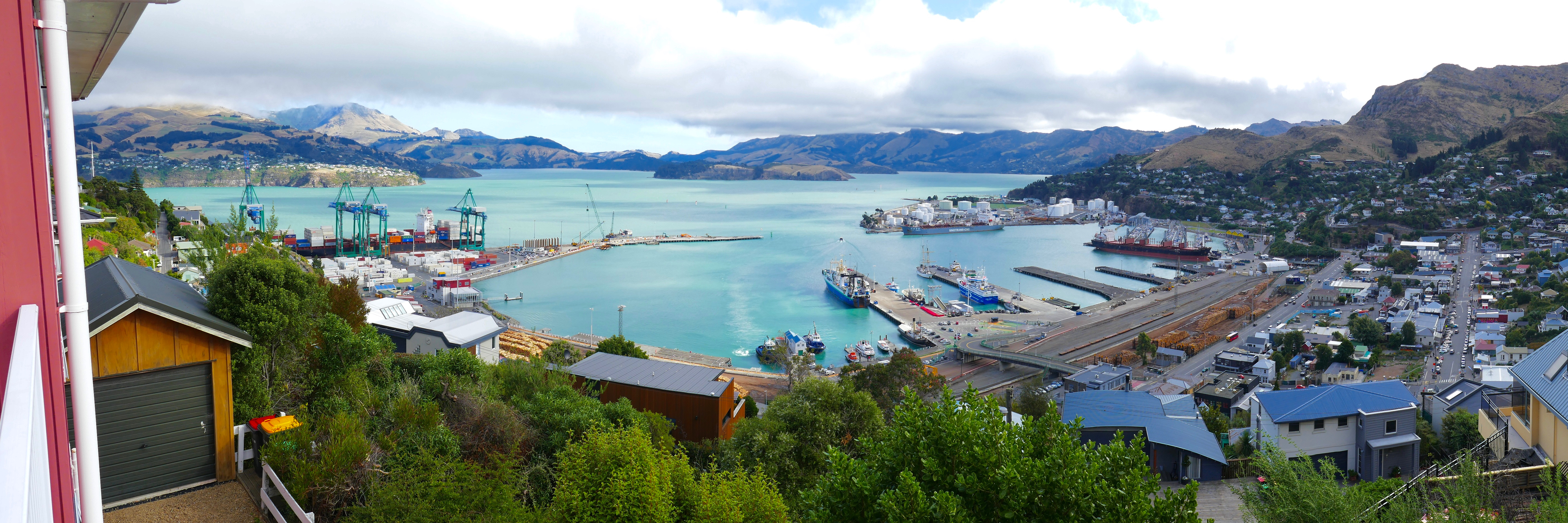
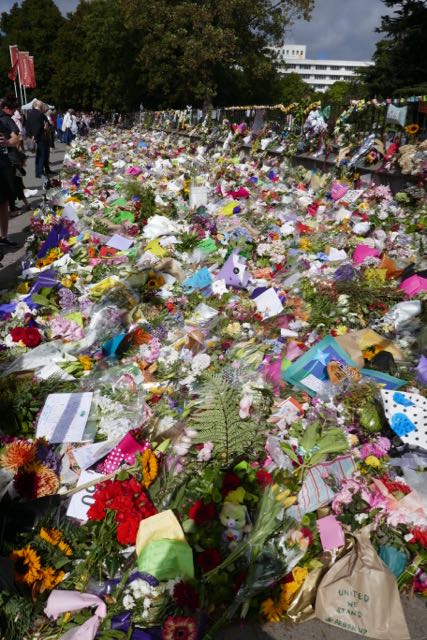
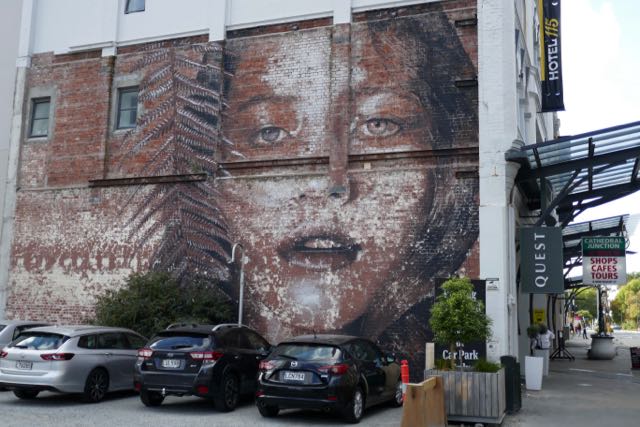
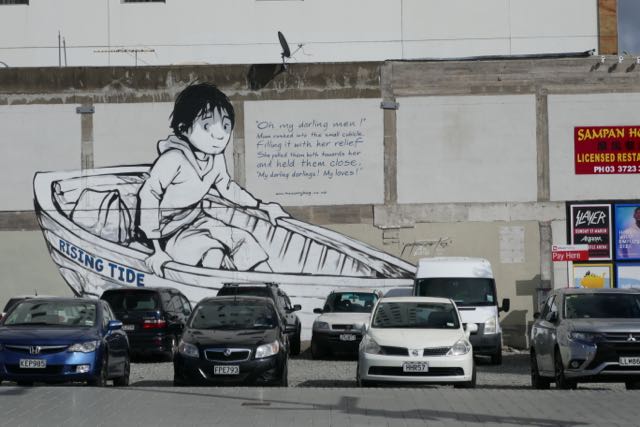
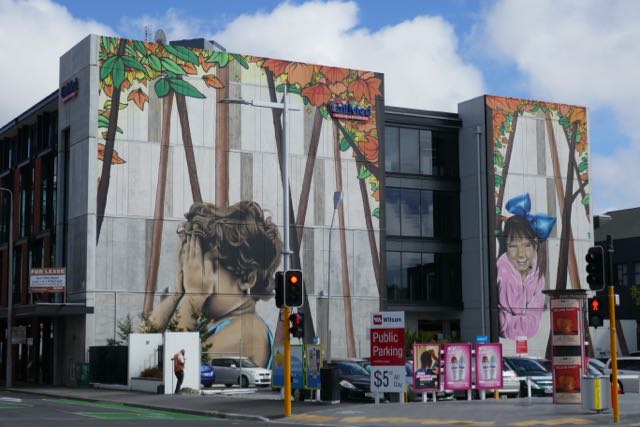
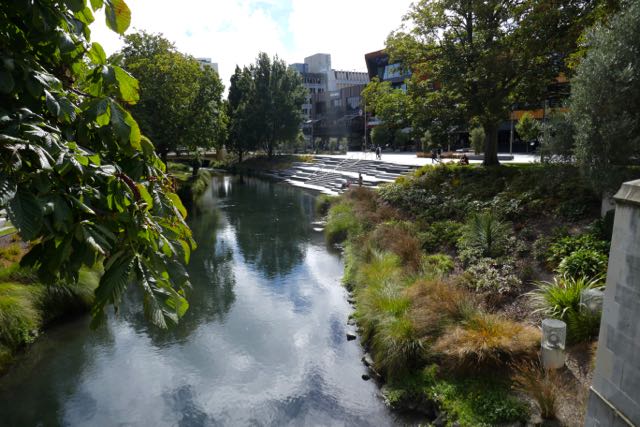
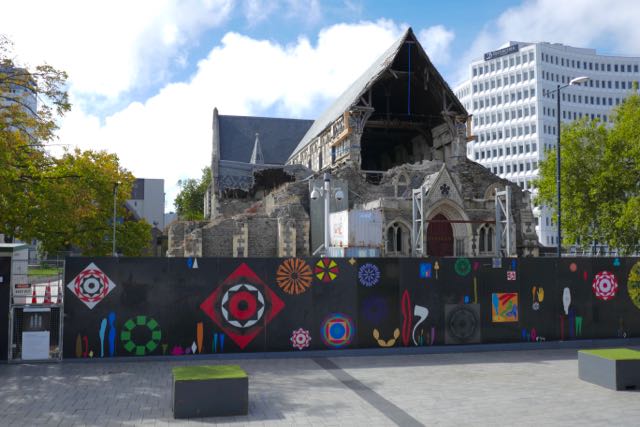
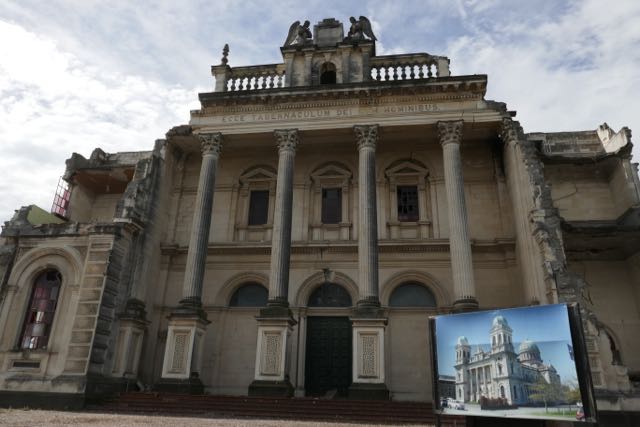


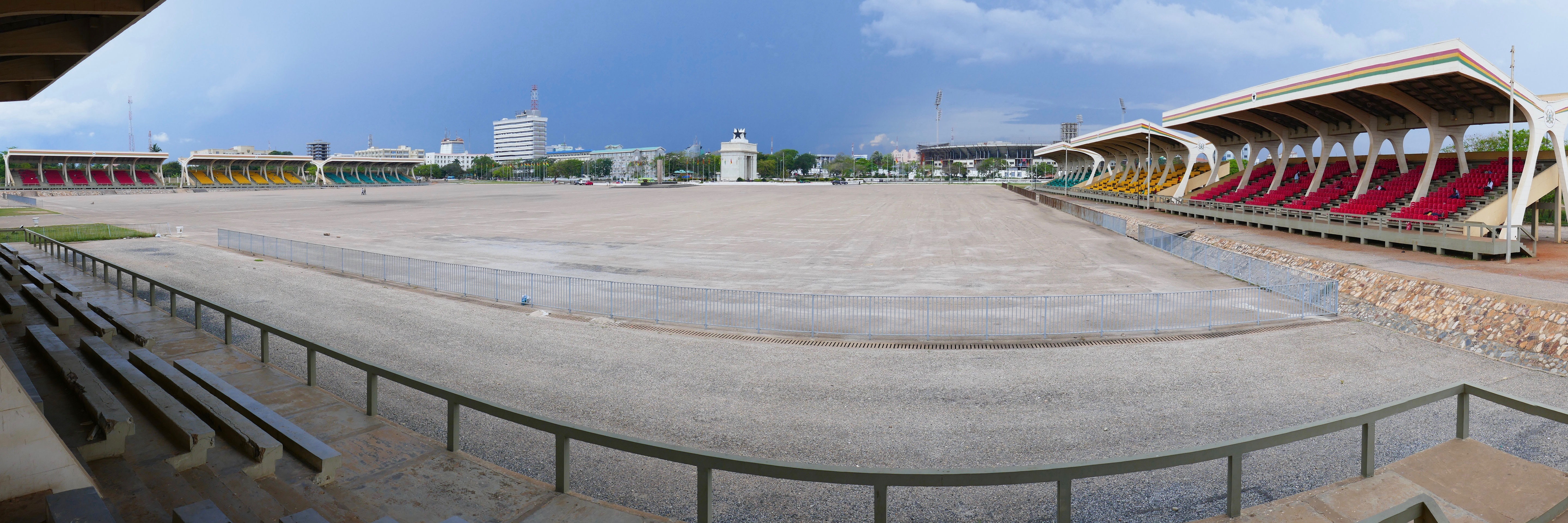
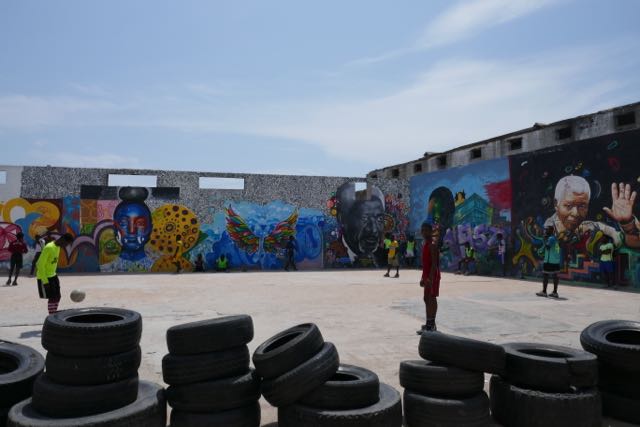
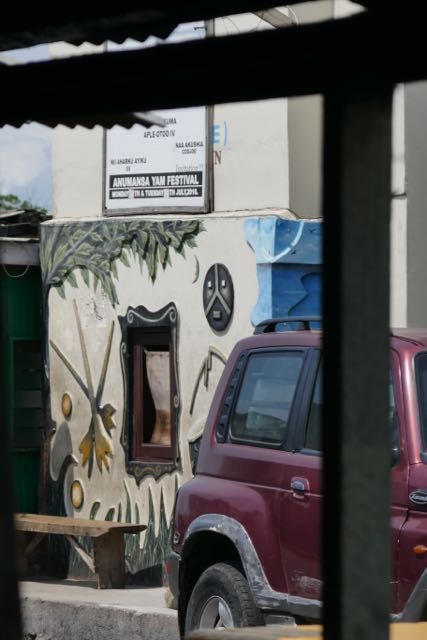
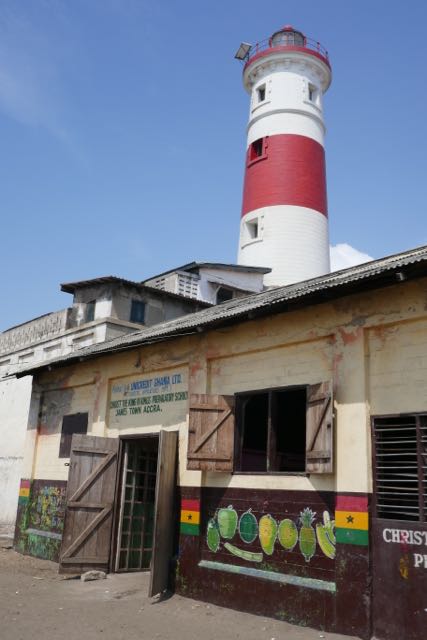
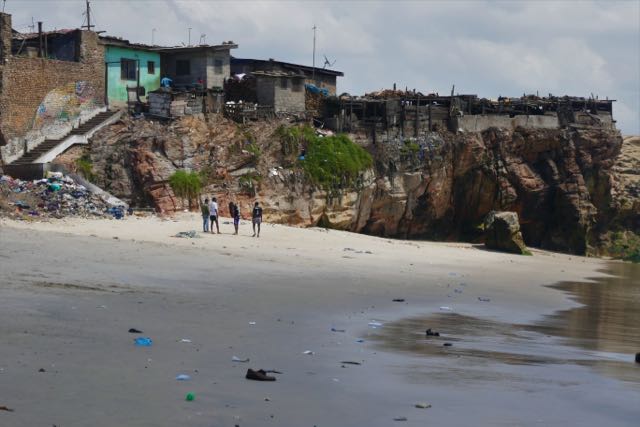
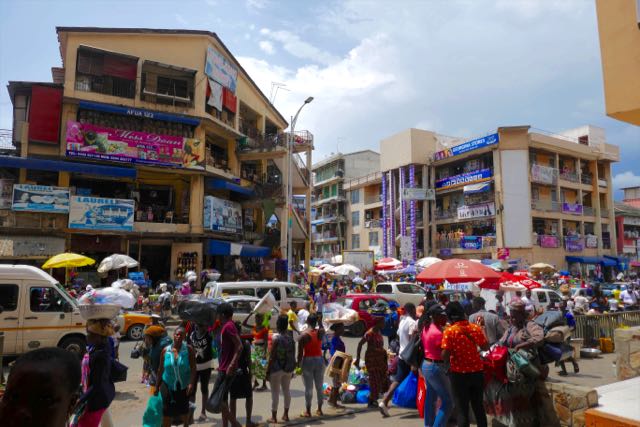
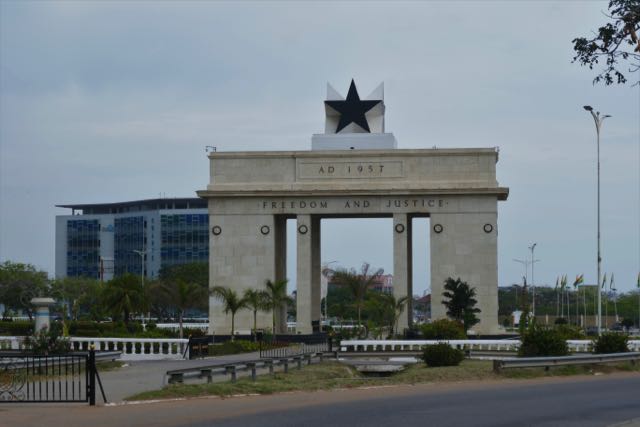
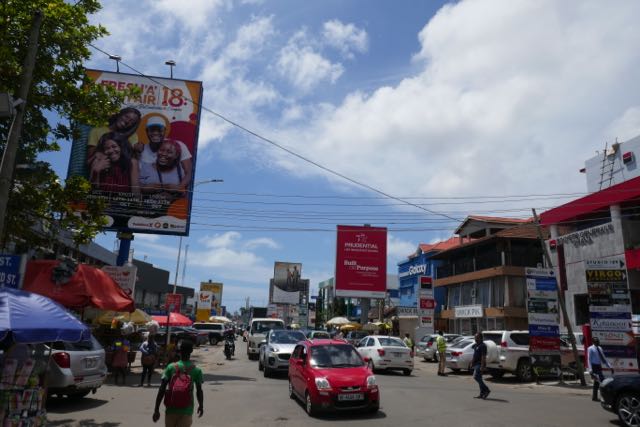


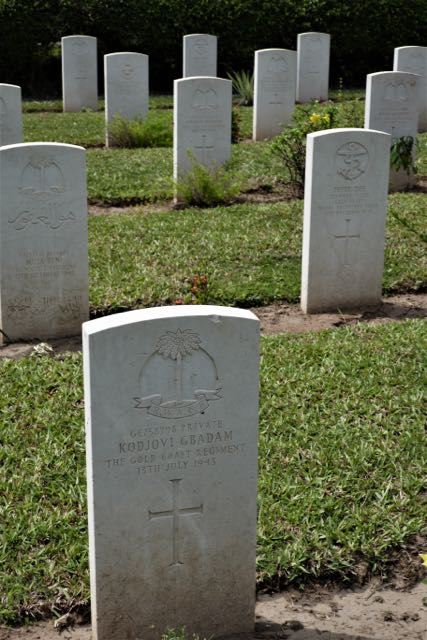
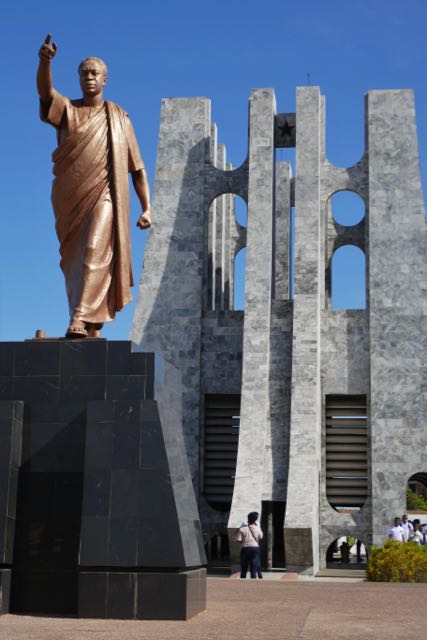
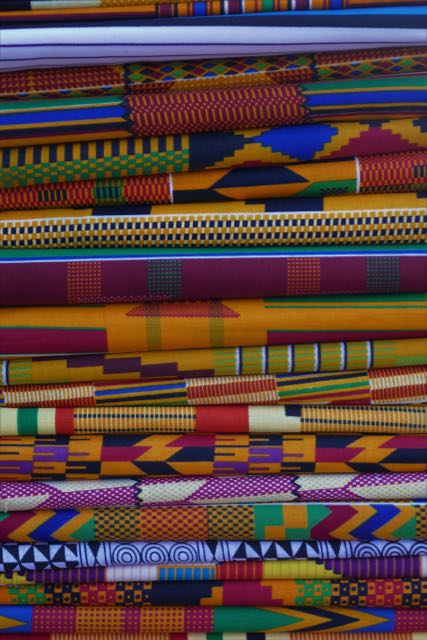
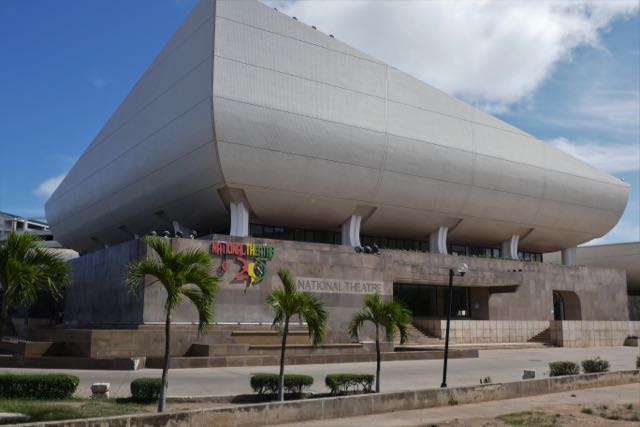
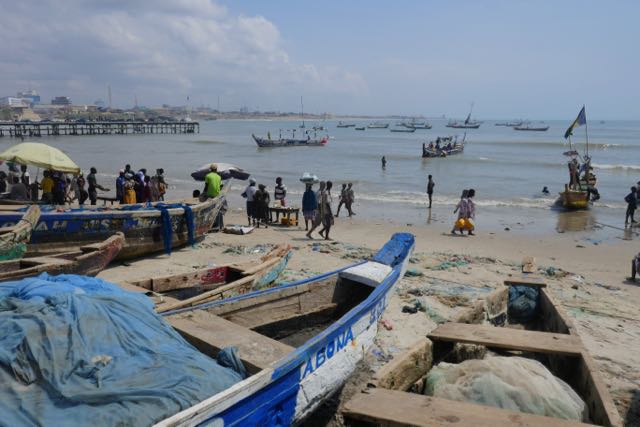
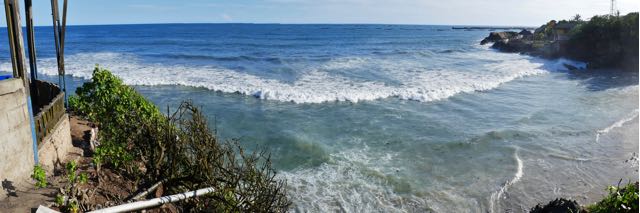


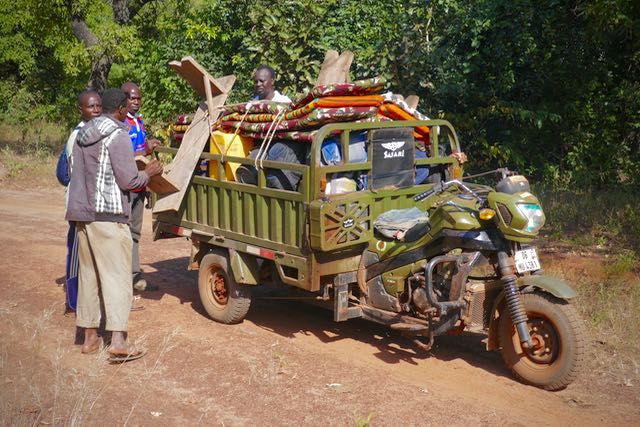
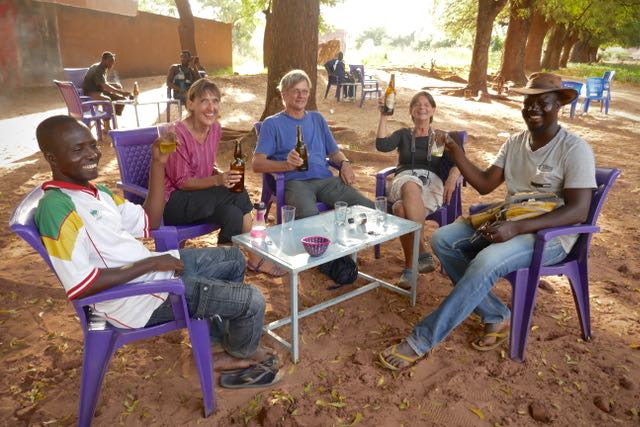

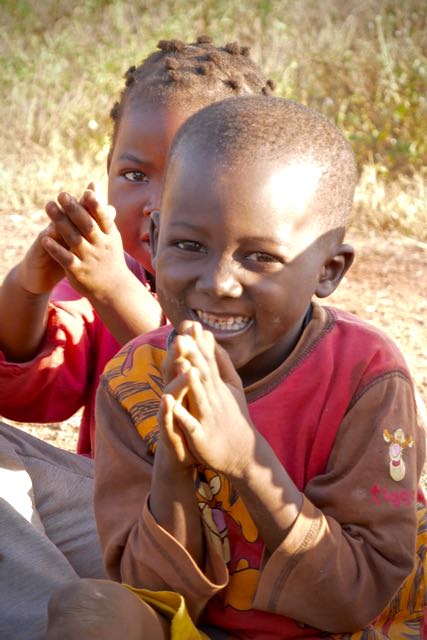
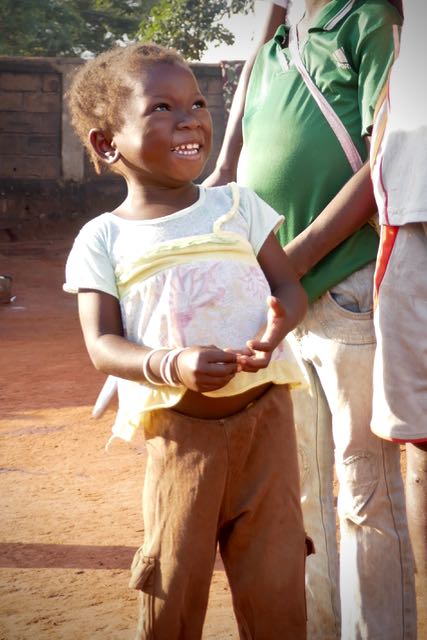
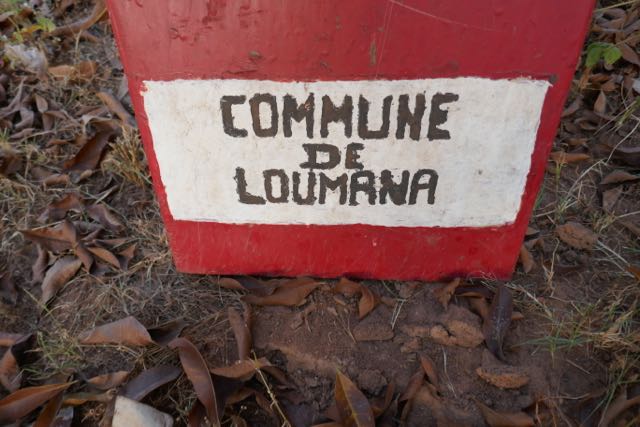
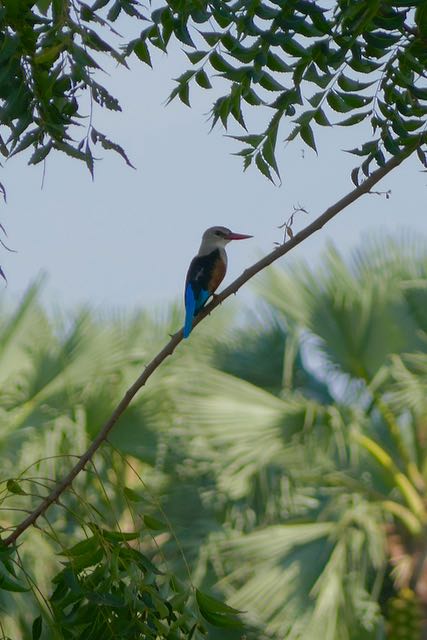

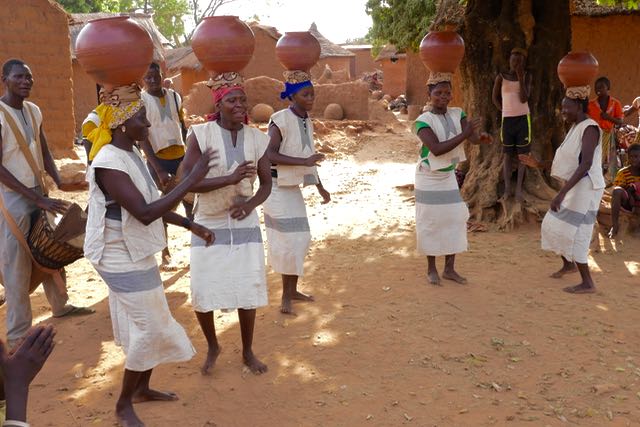
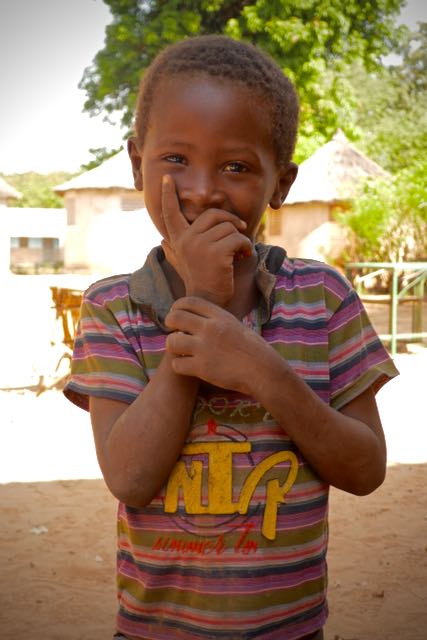
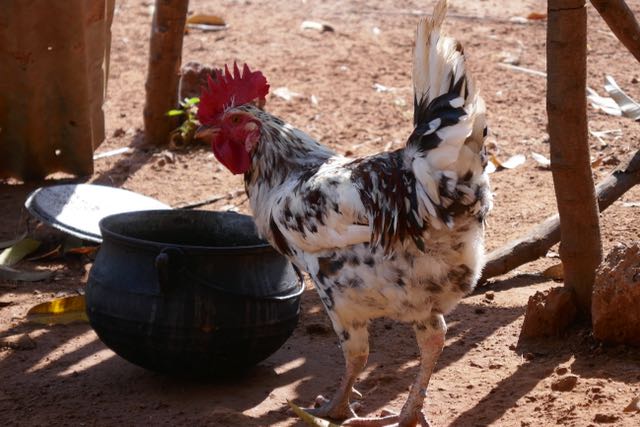
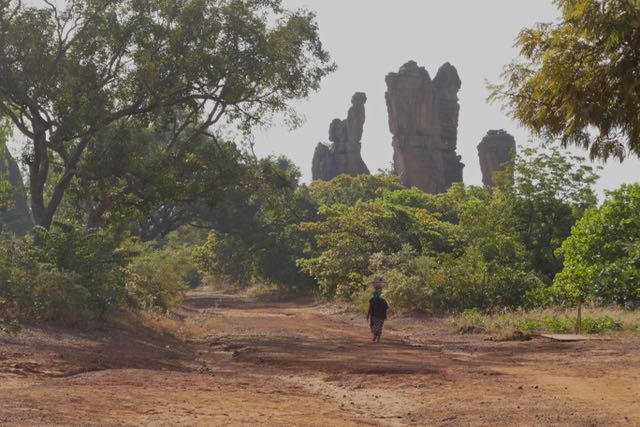
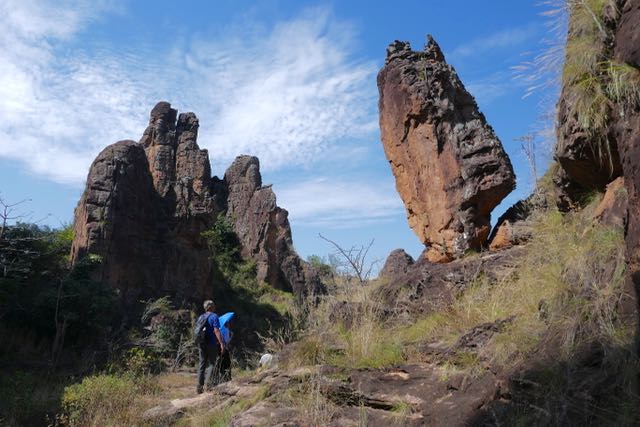
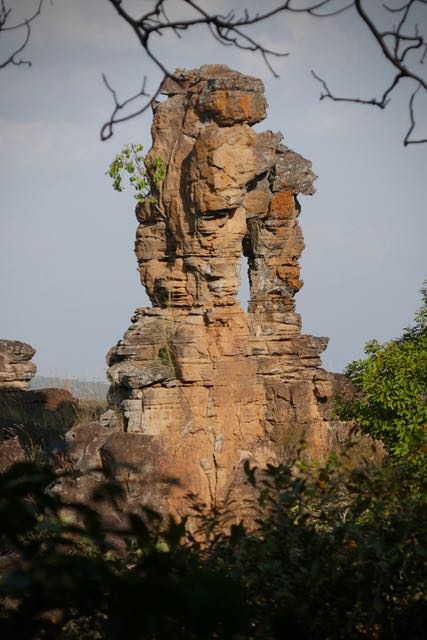
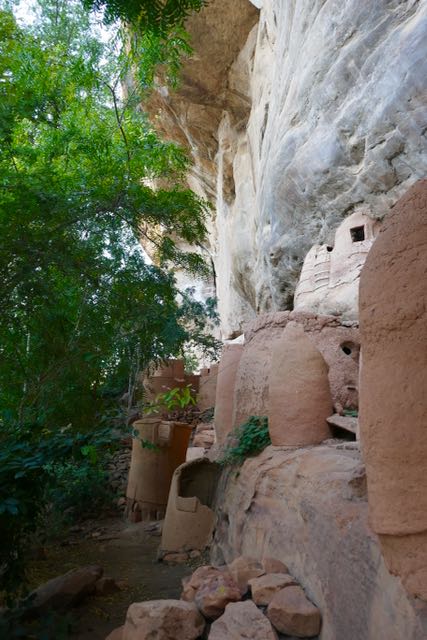


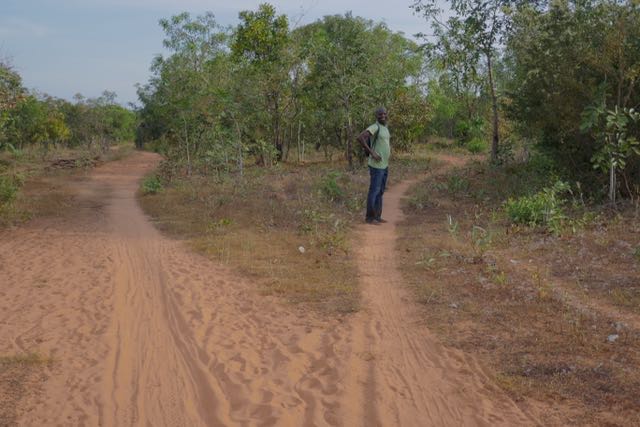

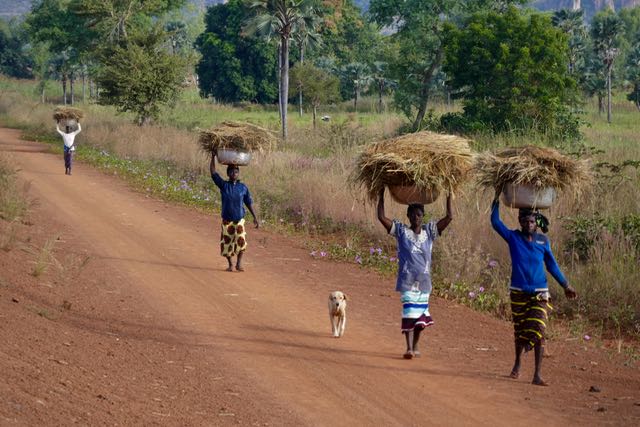


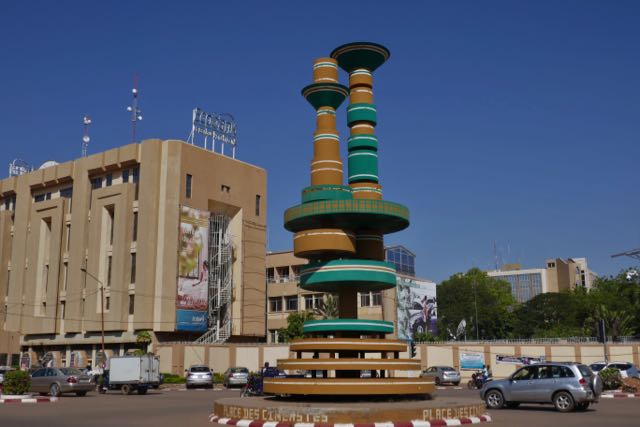
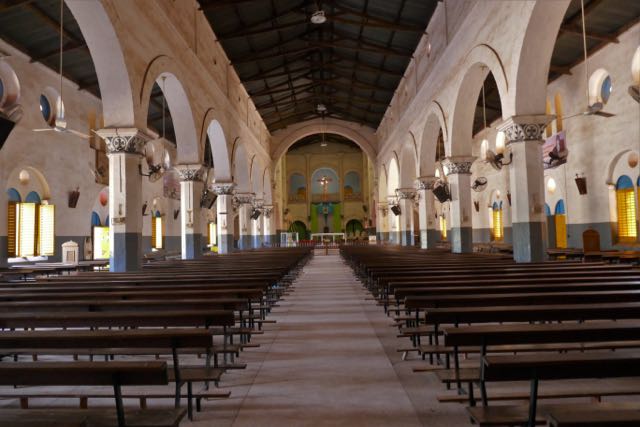
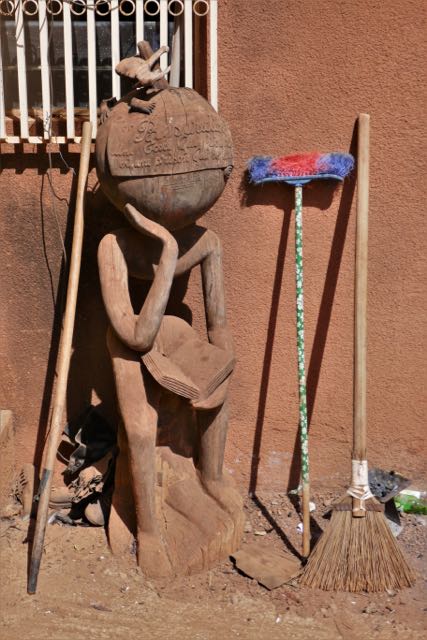
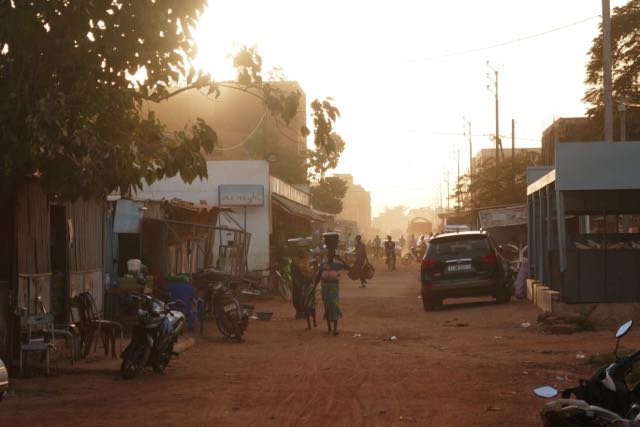
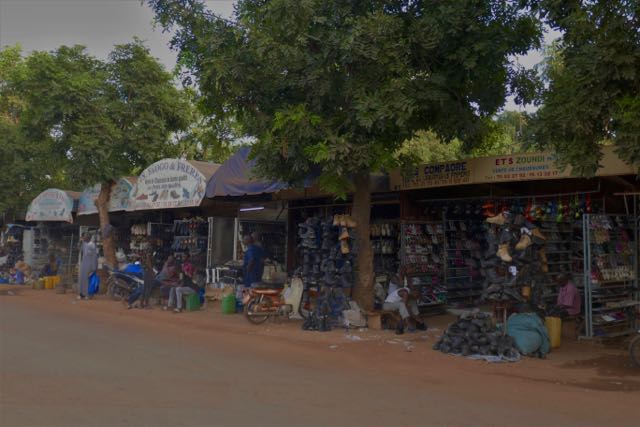
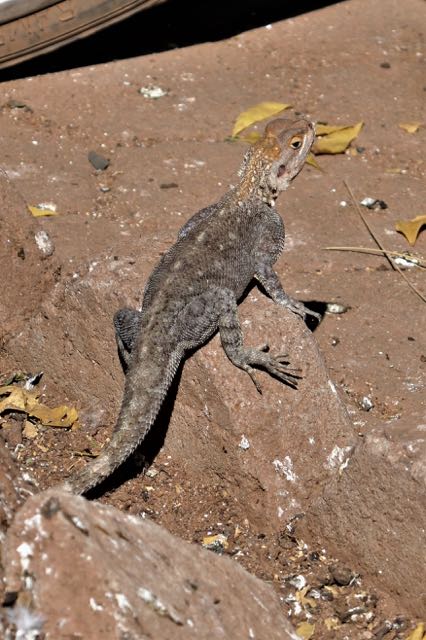
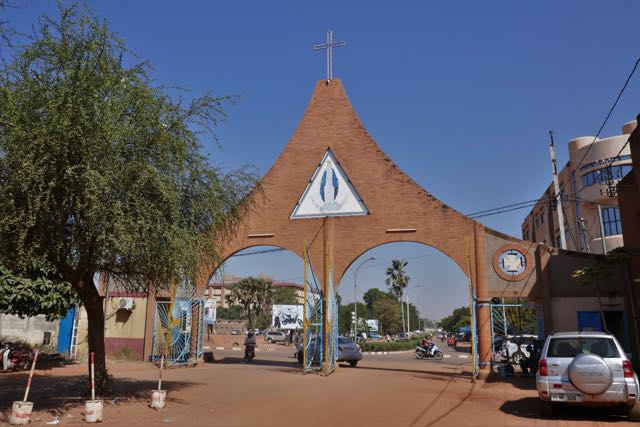
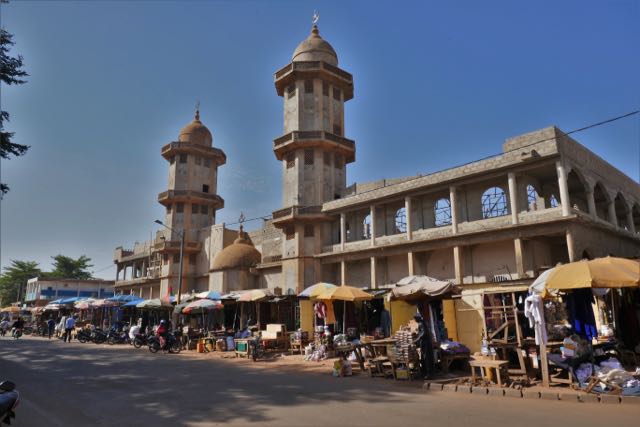
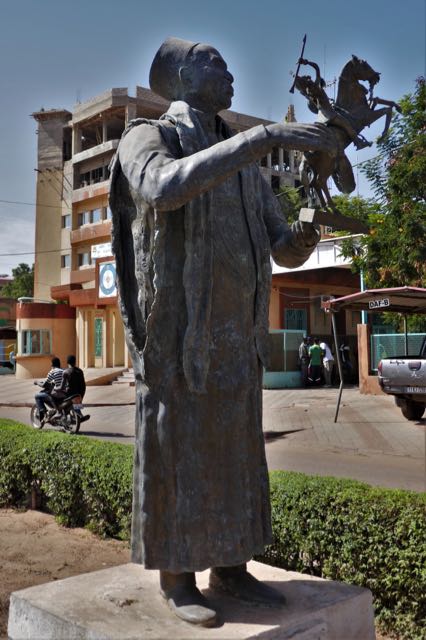
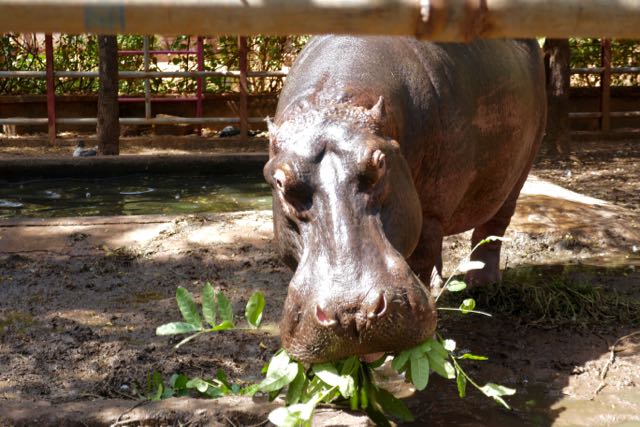
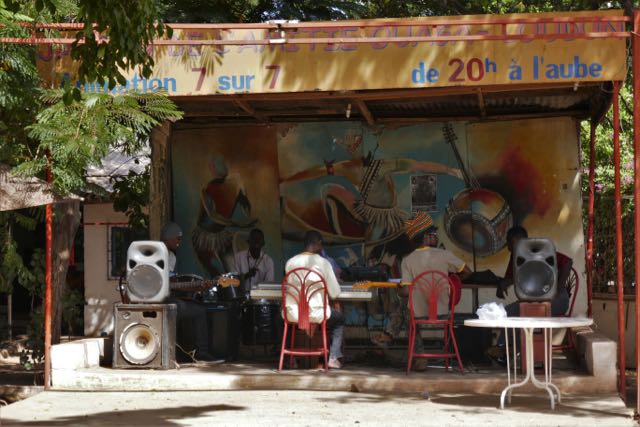

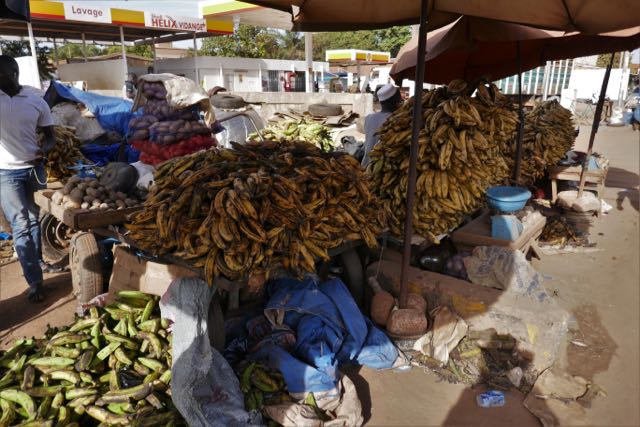
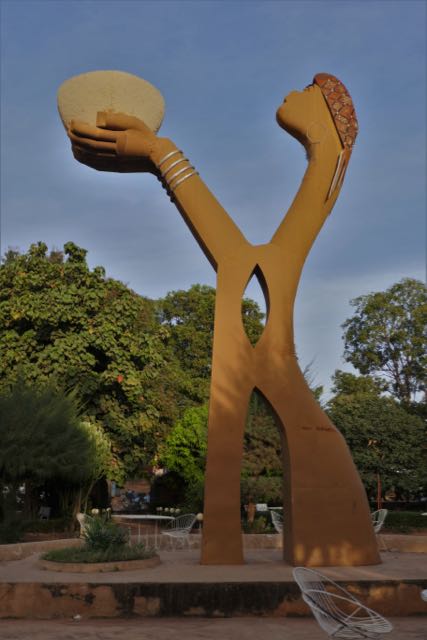
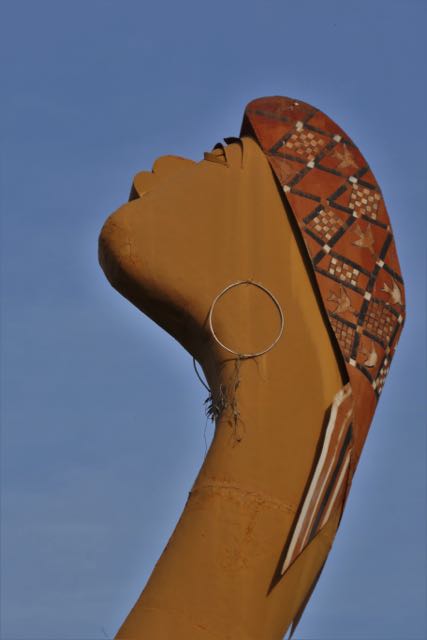
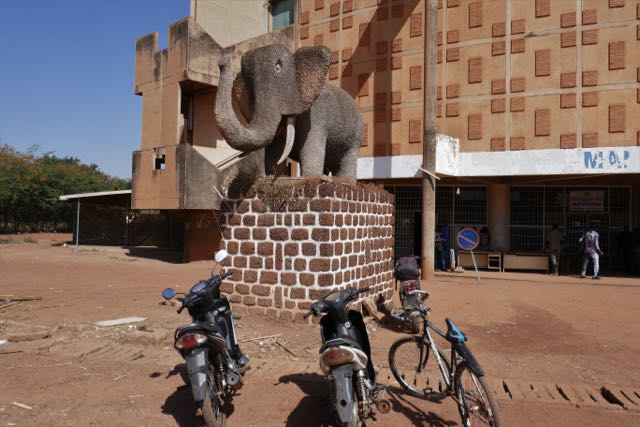

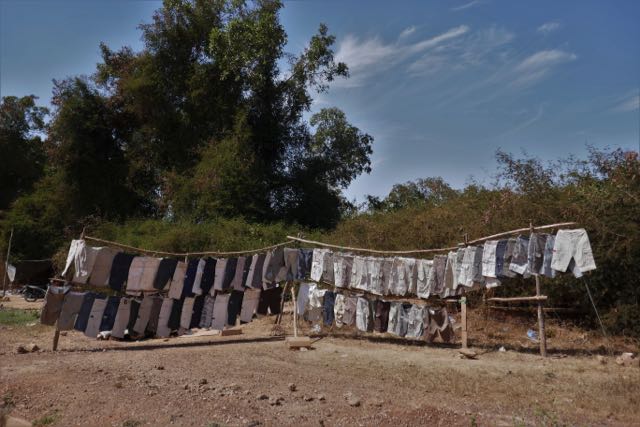
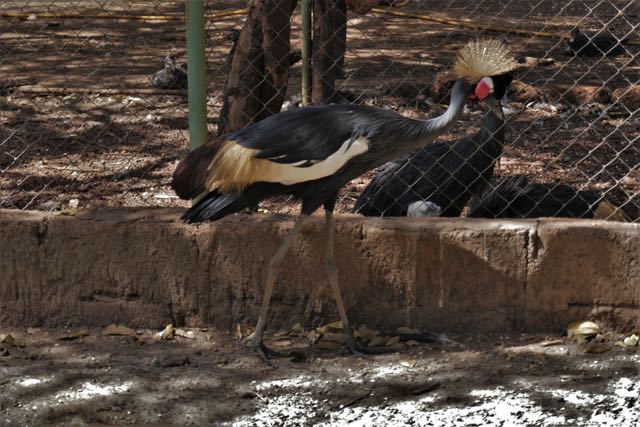
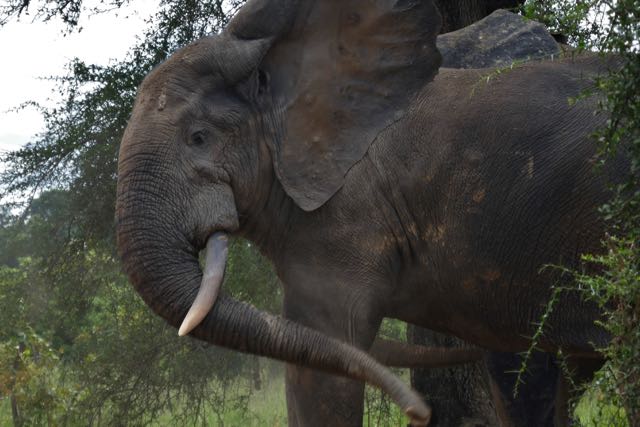
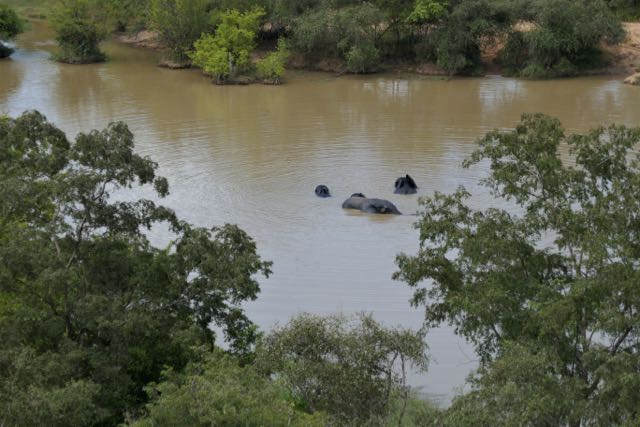
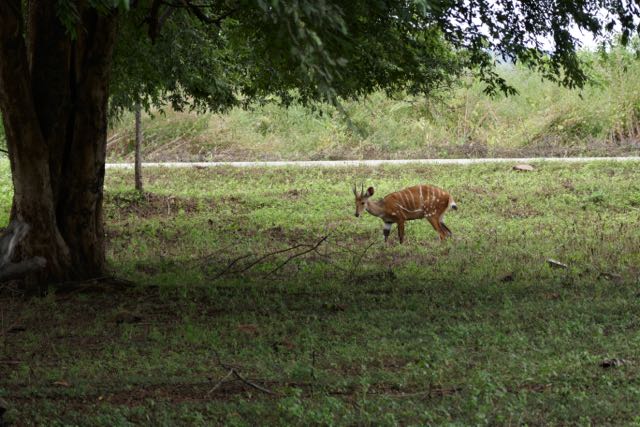
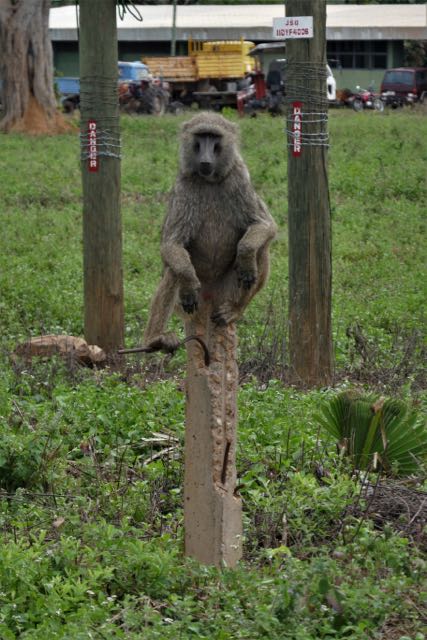

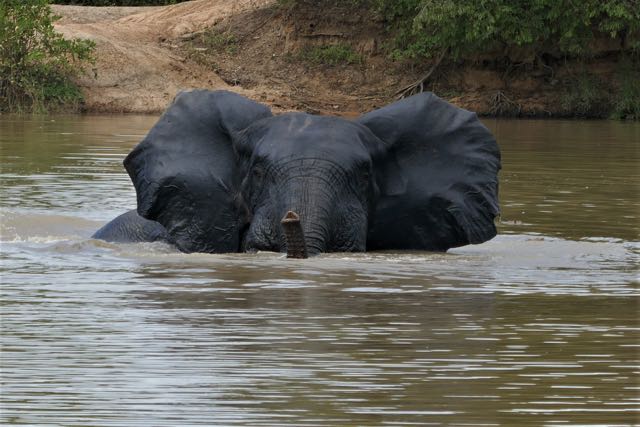
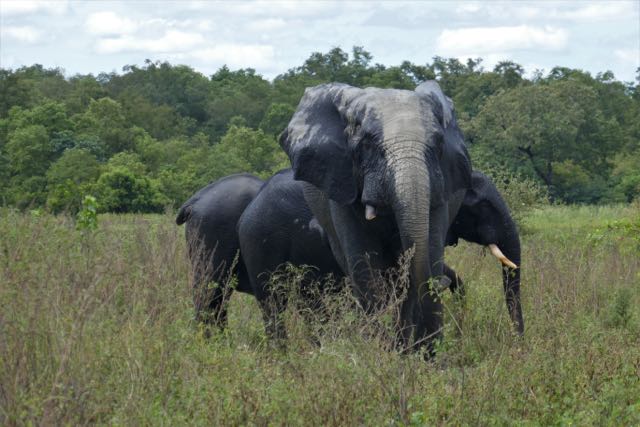
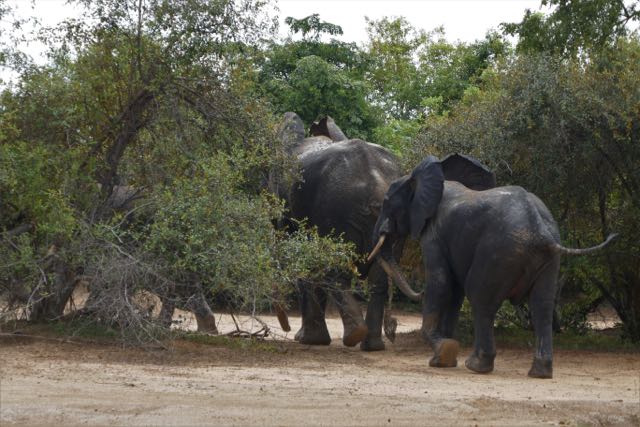
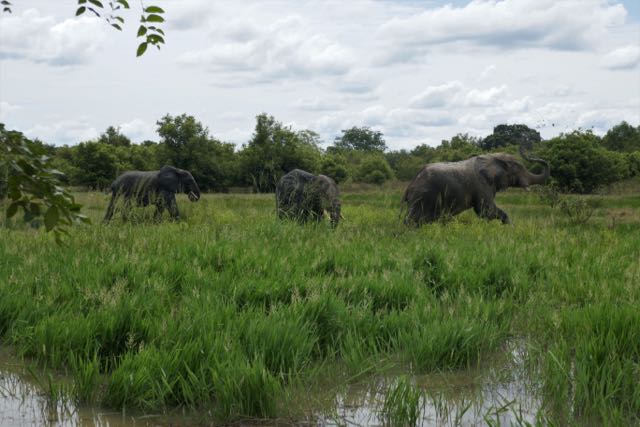
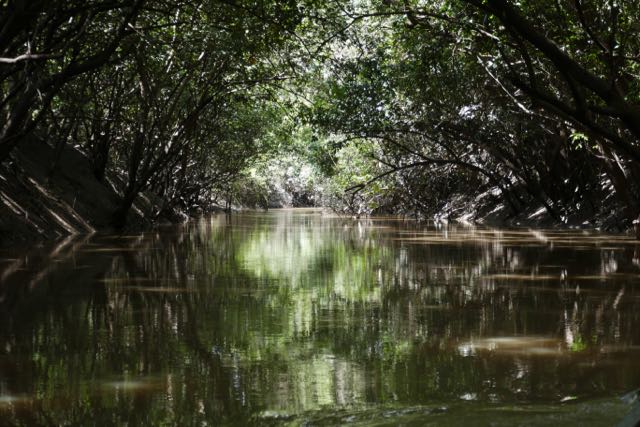
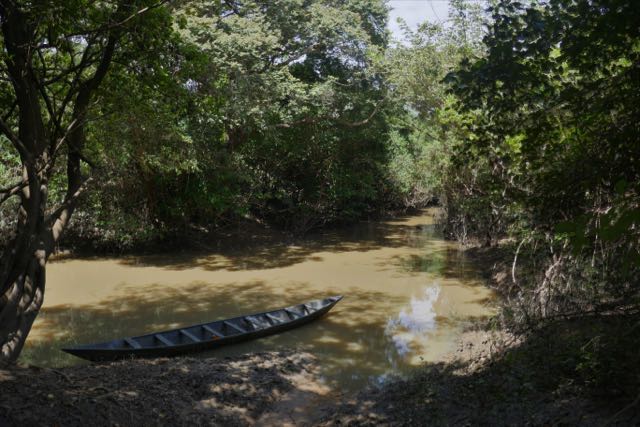
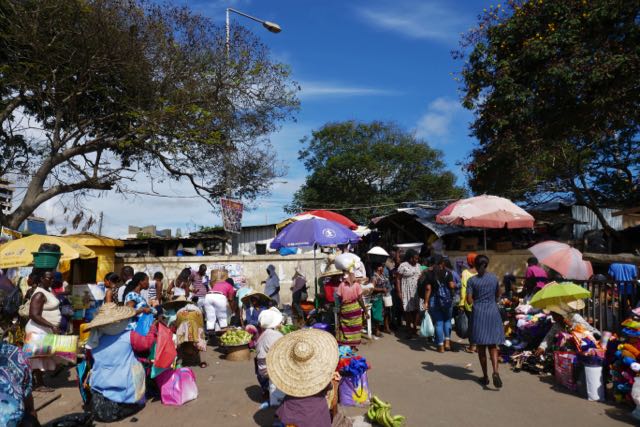
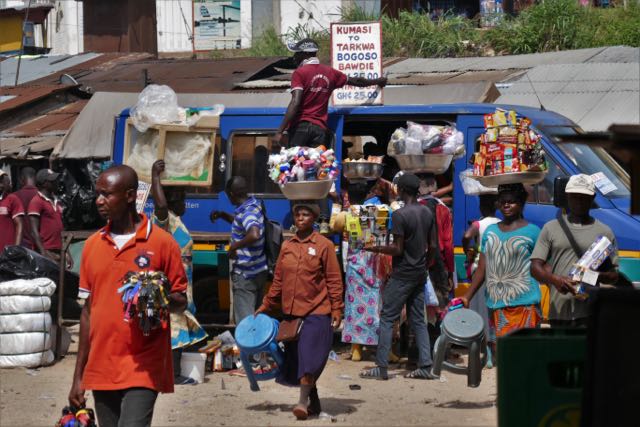
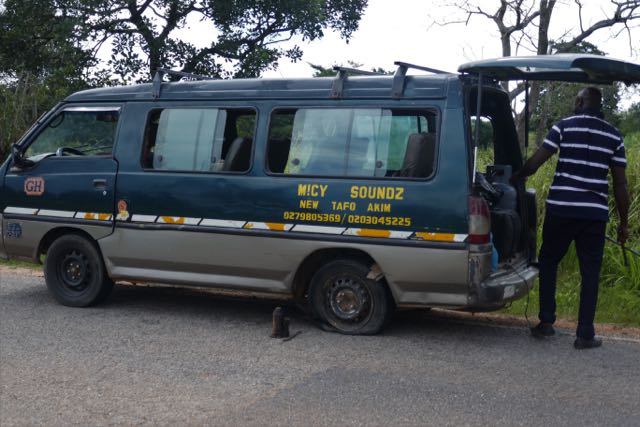
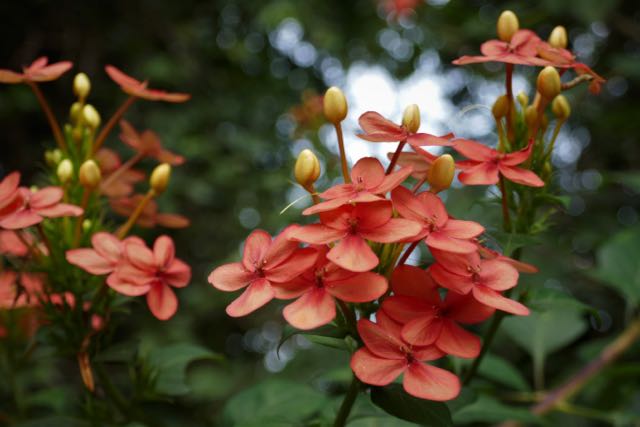
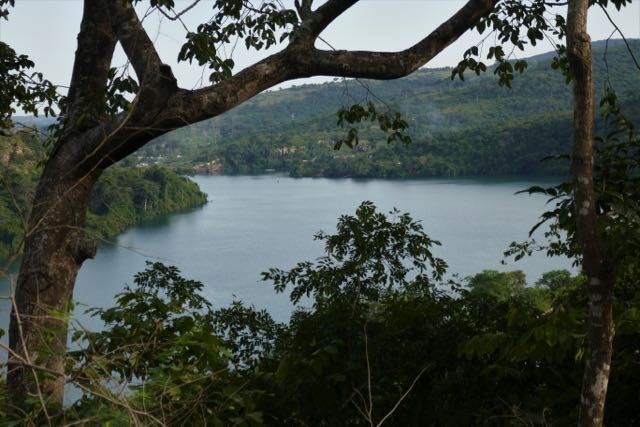

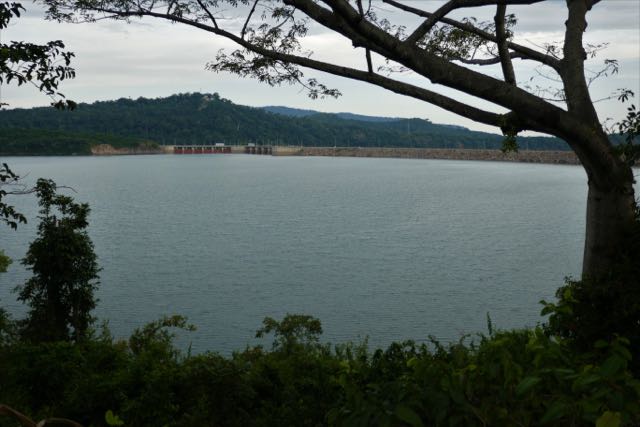
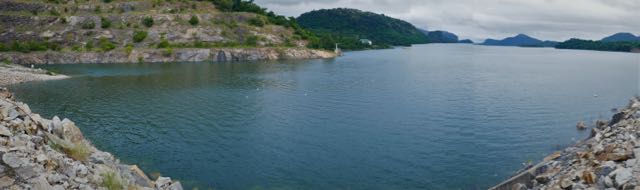
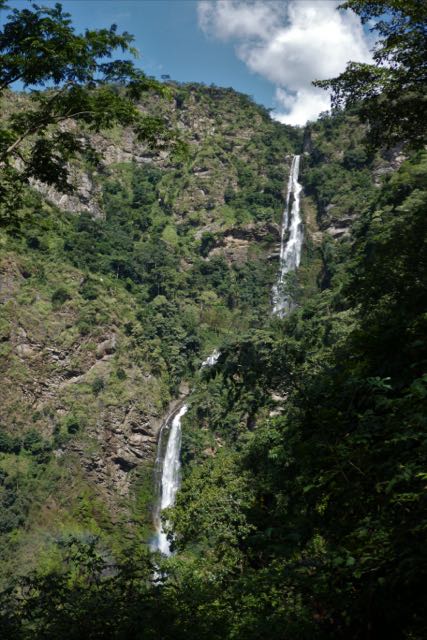
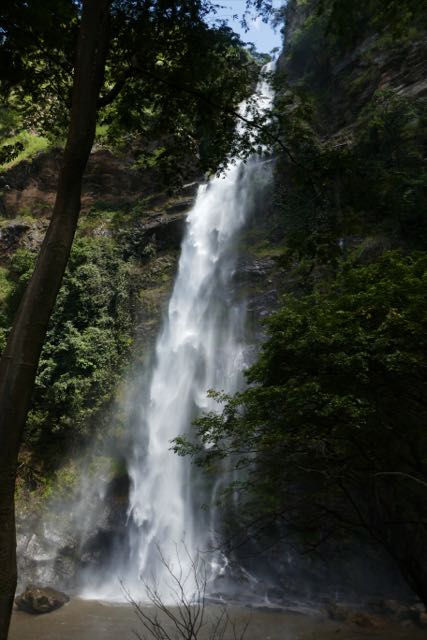
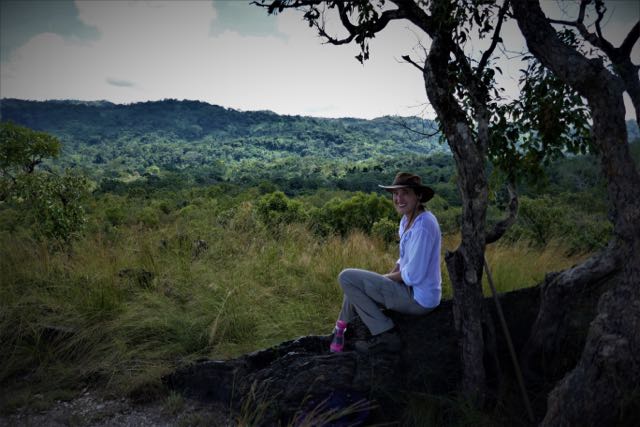
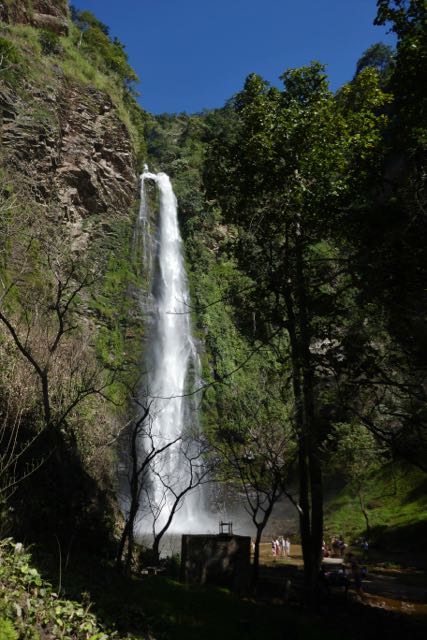
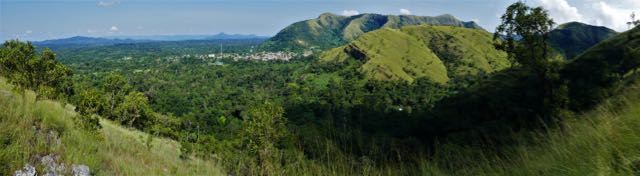
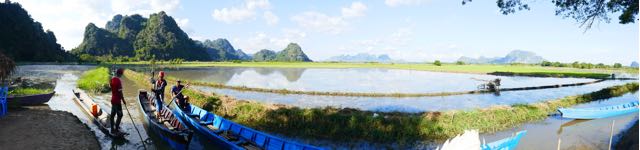
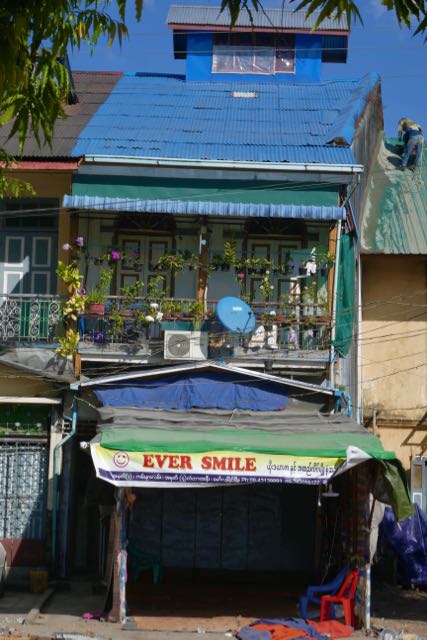
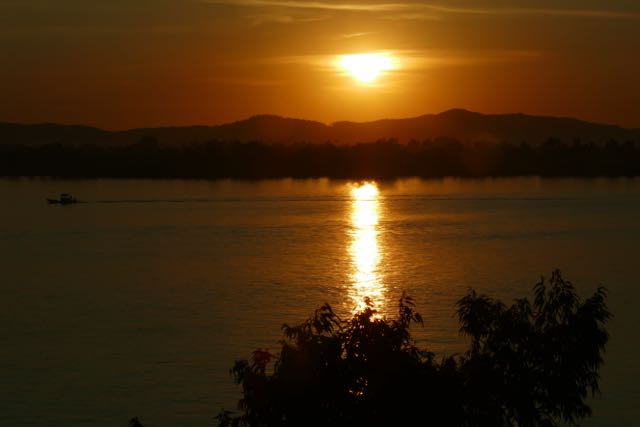
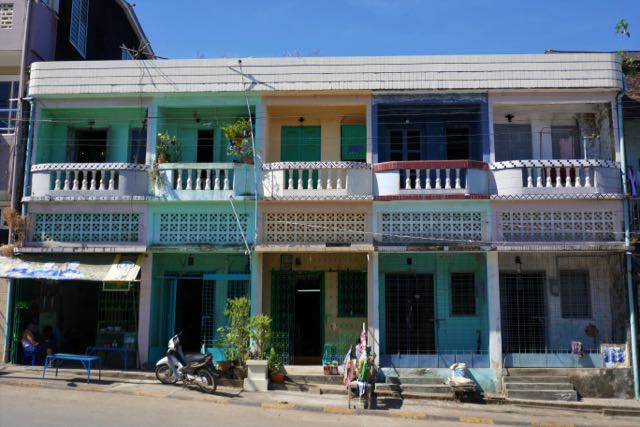
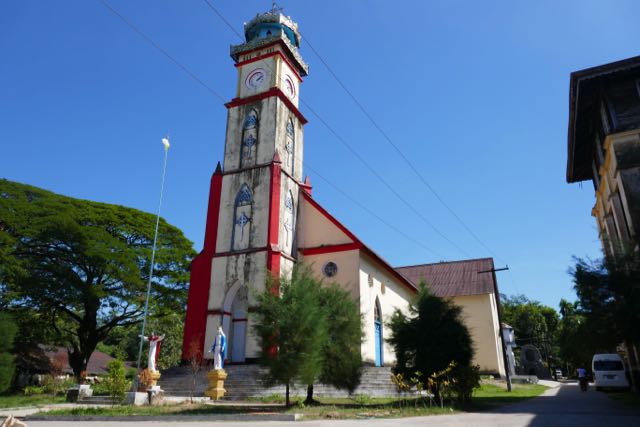
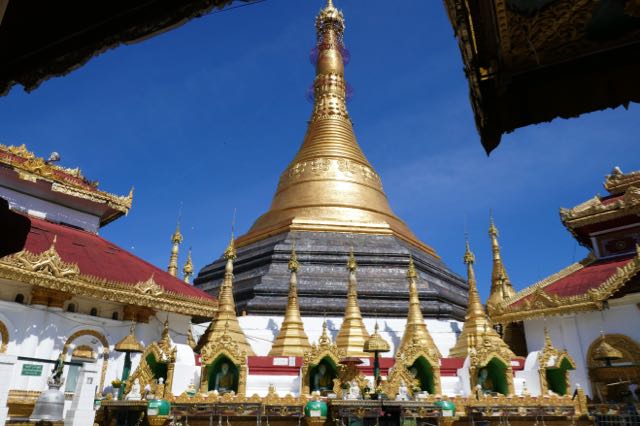
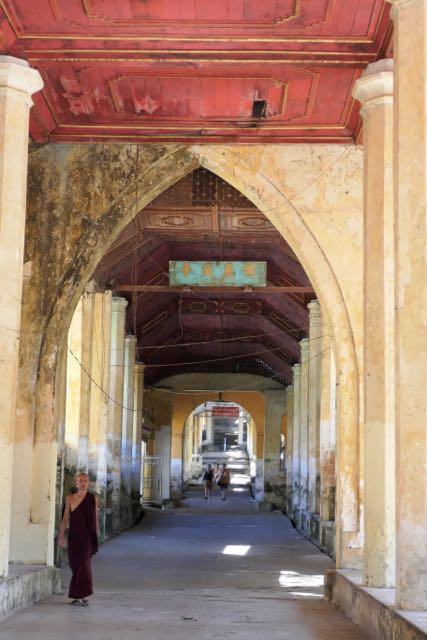
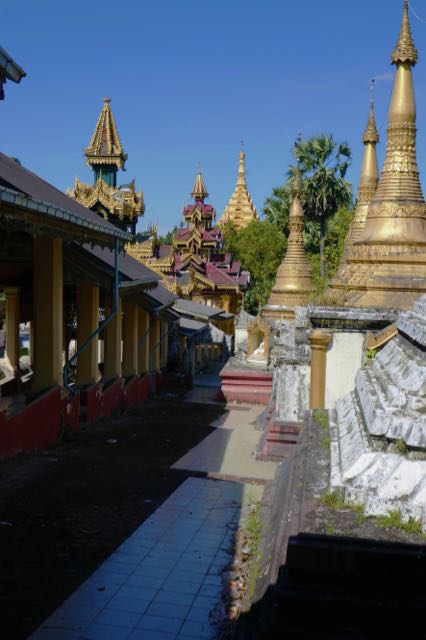
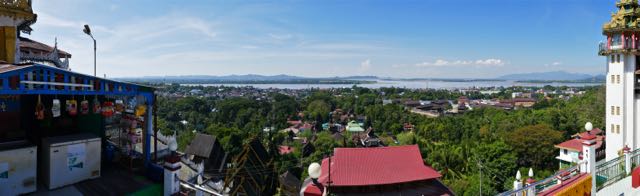
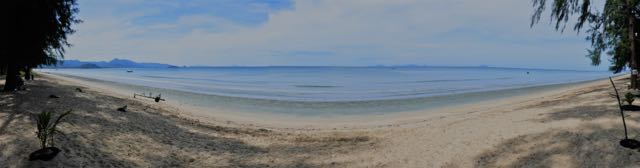
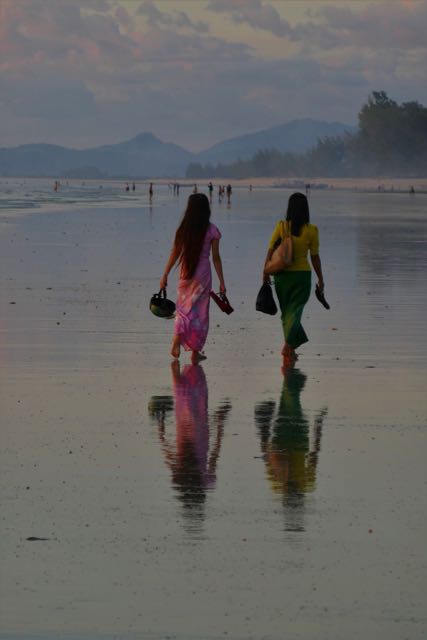
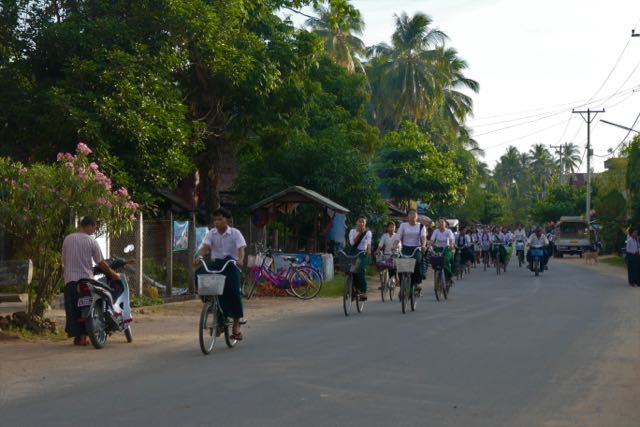
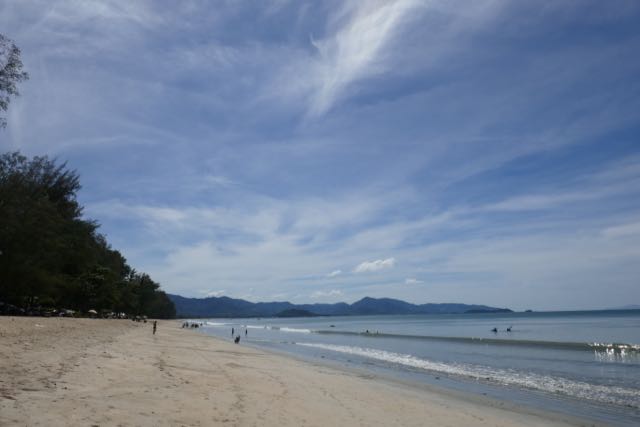
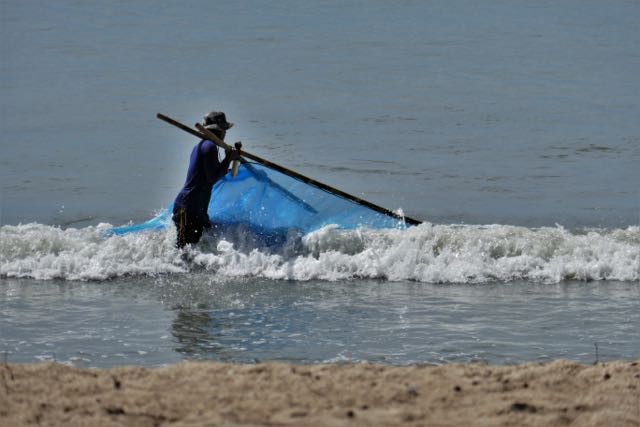

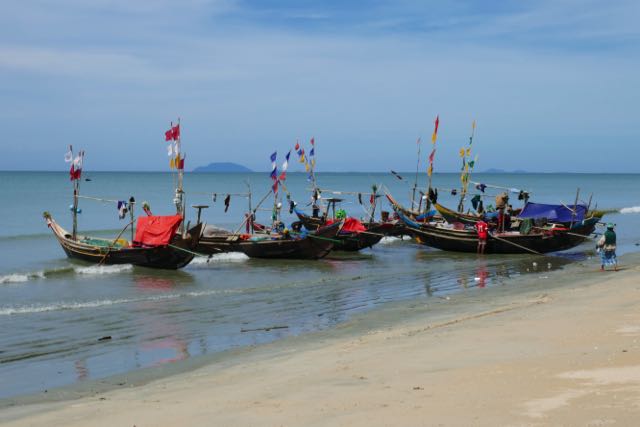
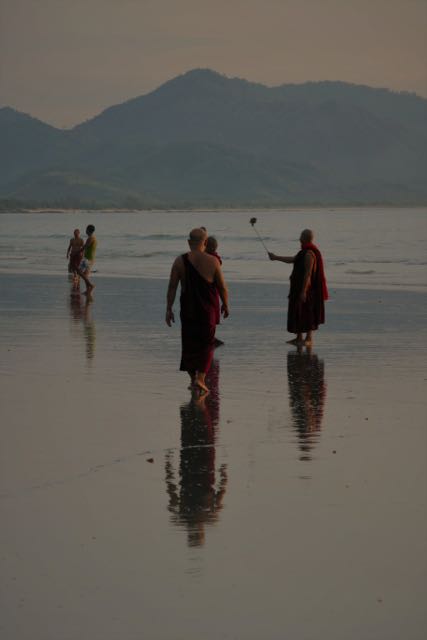
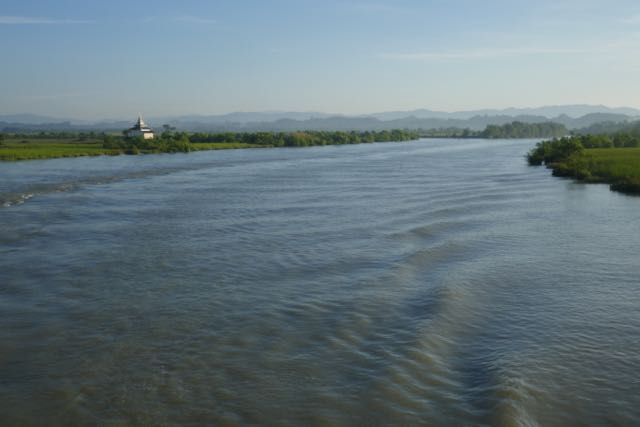
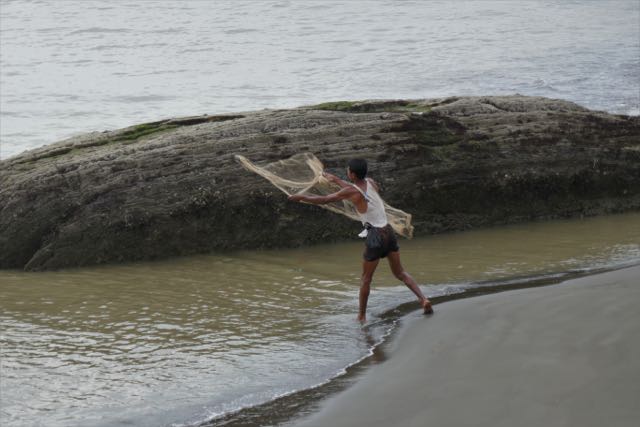
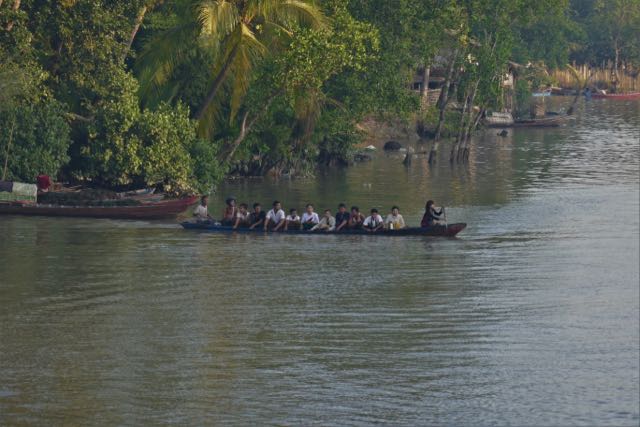
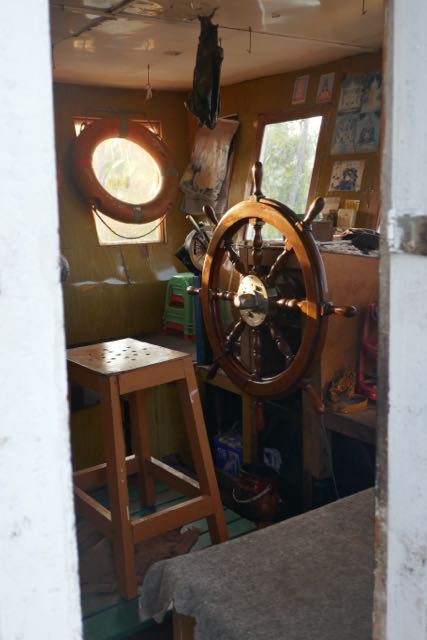
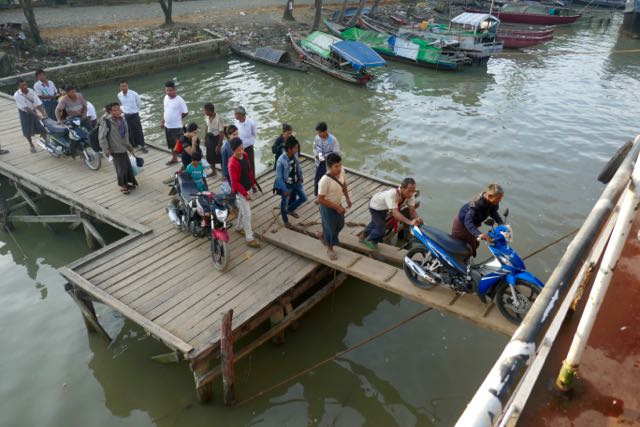
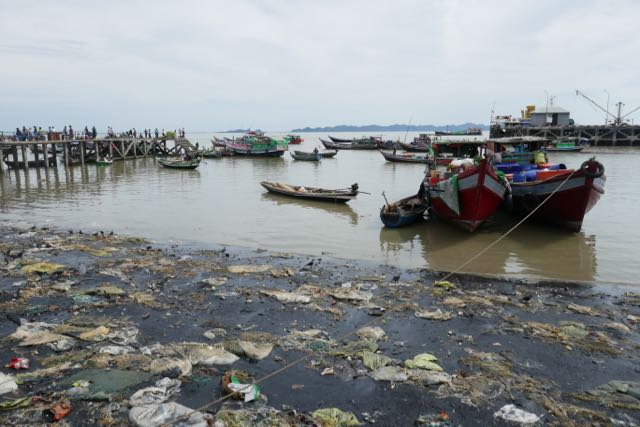
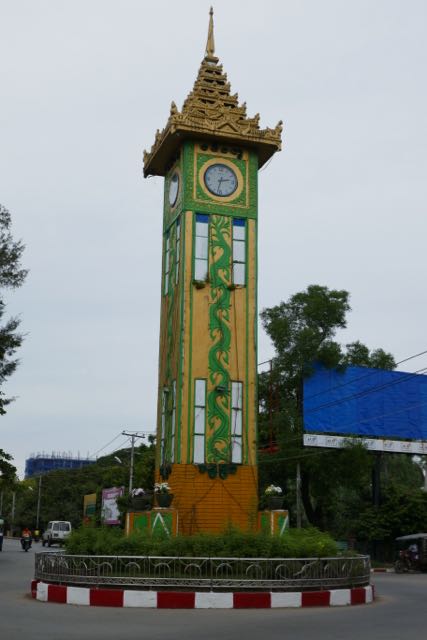
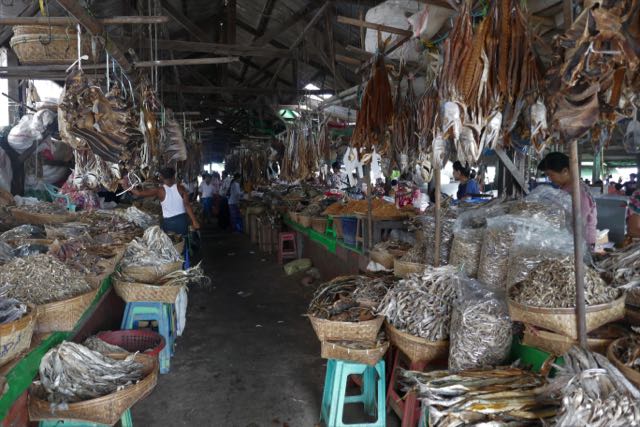
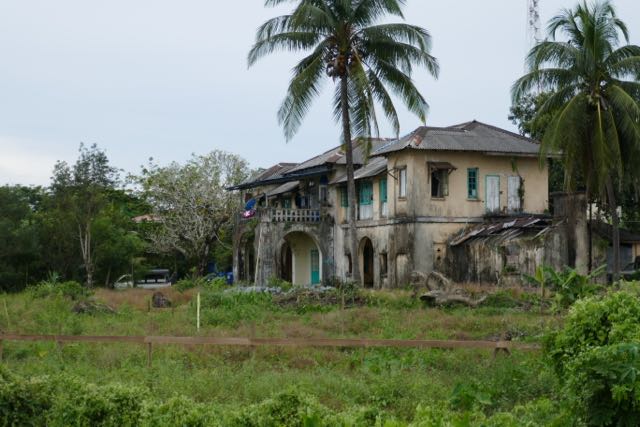

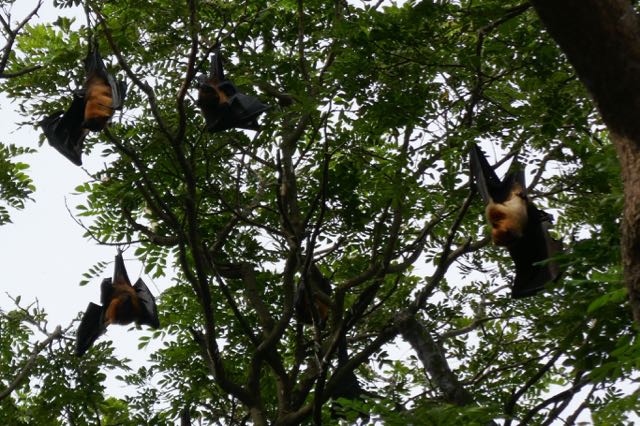
 Travels of a Reluctant Lawyer